Peptide cancer vaccines: what the human trials actually show
News
New reviews find peptide cancer vaccines are generally well tolerated but have not shown clear survival benefit in controlled trials. Here's the evidence.

Several reviews published in 2026 pool clinical-trial evidence on cancer vaccines, including peptide vaccines, in melanoma, glioblastoma and a rare liver cancer [1, 2, 3]. Their findings point the same way: peptide vaccines tend to cause fewer serious immune side effects than more aggressive immunotherapies, but no controlled trial in these reviews has shown that they help people live longer [1, 2]. At the same time, lab and computational work is aimed at known weak points, such as unstable peptides and weak immune responses [4, 5].
Key takeaways
- A systematic review of 54 melanoma trials found that peptide- and DNA-based vaccines were linked to fewer immune-related side effects than cell therapies, but also to lower reported response rates. These comparisons are across trials and uncontrolled [1].
- A scoping review of first-line immunotherapy for glioblastoma, which included 12 reports on peptide and neoantigen vaccines, found that no randomized trial improved overall survival [2].
- In a small phase 1 trial in a rare liver cancer, most patients who completed the first vaccine phase developed tumor-specific T-cell responses. Because the vaccine was given with two checkpoint inhibitors, its own effect cannot be separated out [3].
- Mouse studies of more oxidation-resistant peptides and reviews of AI-based epitope prediction target practical problems. Neither has yet shown benefit in people [4, 5].
Melanoma: fewer side effects, lower response rates
MART-1 is a protein made in large amounts by melanoma cells, which makes it a target for several immune-based approaches [1]. A 2026 systematic review searched trial registries and literature databases for clinical trials aimed at MART-1 [1]. It included 54 trials with 1,292 treated patients. Of these, 517 had measurable disease and could be assessed for tumor shrinkage [1].
Trials of cell transfer and engineered T-cell (TCR-T) therapies reported higher objective response rates than trials of peptide- and DNA-based vaccines [1]. The vaccine trials, however, reported fewer immune-related adverse events [1].
The authors are clear about the limits. These are uncontrolled comparisons between different trials, not head-to-head tests [1]. Patients in the cell-therapy trials usually also received lymphodepleting chemotherapy and interleukin-2, and the vaccine groups did not, so the differences cannot be credited to MART-1 targeting alone [1]. No meta-analysis or formal comparison of effectiveness was done [1]. The review concludes that peptide and DNA vaccines may be worth studying further as parts of combined approaches, not that they work on their own [1].
Glioblastoma: feasible, but no survival gain
Glioblastoma is the most aggressive primary brain cancer in adults [2]. A 2026 scoping review gathered clinical trials of first-line immunotherapy in adults with newly diagnosed glioblastoma, searching four databases up to July 2026 [2]. Of 45 studies, 12 reports covered peptide and neoantigen vaccines. Others covered checkpoint inhibitors, dendritic cell vaccines, cell therapies, viral and gene therapies, and whole-tumor vaccines [2].
Most of the evidence came from early-phase studies. Thirty-six of the 45 studies enrolled fewer than 100 patients, only 14 included a randomized comparison, and 5 were phase III [2]. Median overall survival ranged from 11.5 to 38.4 months. The highest figures came from small, highly selected single-arm groups, which tend to look better than they are [2].
The central finding is that no randomized trial improved overall survival [2]. Important adverse events were rare and occurred almost only in checkpoint inhibitor trials [2]. According to the authors, outcomes still depended more on tumor biology (MGMT promoter status) and on how much tumor was surgically removed than on which immunotherapy patients received [2]. The review describes immunotherapy in this setting as feasible and tolerable, but not yet effective at extending life [2].
A rare liver cancer: an early signal that is hard to interpret
Fibrolamellar carcinoma is a rare liver cancer that mainly affects adolescents and young adults. It is driven by a near-universal gene fusion called DNAJB1::PRKACA [3]. Because the fused protein exists only in tumor cells, it is a natural target for a vaccine [3].
A 2026 narrative review summarizes a phase 1 trial of a peptide vaccine based on this fusion, given together with the checkpoint inhibitors nivolumab and ipilimumab [3]. The trial reported an objective response rate of 19%. Fusion-specific T-cell responses appeared in 9 of 12 patients who completed the first, priming phase [3].
These results suggest that the vaccine can prompt the immune system to recognize the fusion protein. However, the trial was small and had no control group [3]. Because every patient also received two checkpoint inhibitors, the review notes that the vaccine’s contribution cannot be separated from theirs [3]. More broadly, systemic options for this cancer rest mainly on small non-randomized studies [3].
Fixing the weak points: stability and epitope prediction
Peptide vaccines have practical problems as well as clinical ones. Many peptide antigens contain the amino acids cysteine or methionine, whose sulfur atoms oxidize easily. This can complicate manufacturing and reduce biological activity [4].
A 2026 study in mice tested “oxidation-resistant” versions of peptide antigens. In these versions, cysteine was replaced with alpha-aminobutyric acid and methionine with norleucine, which are similar in shape but contain no sulfur [4]. In several mouse epitope models, the modified peptides produced T-cell responses to the original antigen that were equal to or greater than those produced by the original peptides [4]. The induced T cells were linked to anti-tumor effects in the mice [4]. Replacing cysteine with serine did not work, which shows how sensitive immune recognition is to small chemical changes [4]. This is animal research only, and it does not show that the approach works or is safe in people.
A 2026 review of linear epitope-based vaccines looks at another weak point: choosing the right peptide fragments, or epitopes, in the first place [5]. It assesses deep-learning tools that predict how strongly peptides bind to MHC molecules, which display peptides to T cells. The review reports that these tools have made it more efficient to identify highly immunogenic epitopes [5]. It also notes persistent bottlenecks, including weak immune responses in living organisms, rapid breakdown of peptides by enzymes, and limited protection across viral variants [5]. Much of this review concerns vaccines against infectious disease, and better prediction of binding does not by itself mean better clinical outcomes [5].
A phase 3 trial to watch
A phase 3 trial of a therapeutic cancer vaccine is now recruiting people with non-small cell lung cancer whose disease has stopped responding to immune checkpoint inhibitors (NCT06472245) [6]. The registry entry was last updated in October 2026 [6]. It is a record of the trial’s design, not of its results, so it says nothing yet about whether the vaccine works [6]. Phase 3 trials like this one are the kind of controlled evidence that the reviews above say is missing.
What we still don’t know
- Whether peptide vaccines extend survival. The randomized evidence reviewed in glioblastoma shows no overall survival benefit, and the melanoma evidence is uncontrolled [1, 2].
- What vaccines add in combinations. In the liver cancer trial and in many melanoma studies, other treatments given at the same time make the vaccine’s own effect impossible to isolate [1, 3].
- Whether immune responses predict benefit. Measurable T-cell responses, such as those in 9 of 12 patients in the fusion vaccine trial, have not been shown to translate into longer survival [3].
- Whether lab advances carry over to people. Oxidation-resistant peptides have been tested only in mice, and AI epitope prediction still faces problems with weak responses and peptide breakdown in the body [4, 5].
- How ongoing phase 3 trials turn out. Results from registered trials such as NCT06472245 are not yet available [6].
References
- Efficacy and Safety of Immunotherapeutic Strategies for the Treatment of MART-1-Expressing Melanoma: Systematic Review of Clinical Trials. Cancers (2026). doi:10.3390/cancers18183016
- Immunotherapy for Newly Diagnosed Glioblastoma: Current Evidence and Future Perspectives. Journal of Personalized Medicine (2026). doi:10.3390/jpm16090479
- Fibrolamellar Carcinoma in the Molecular Era: From DNAJB1::PRKACA Biology to Precision Therapeutic Strategies. Journal of Gastrointestinal Cancer (2026). doi:10.1007/s12029-026-01610-y
- Improving peptide vaccine manufacturability without sacrificing immunogenicity: substitution of methionine and cysteine with oxidation-resistant isosteres. The Journal of Immunology (2026). doi:10.1093/jimmun/vkag232
- Advances in linear epitope-based subunit vaccines powered by artificial intelligence: current status and challenges. Frontiers in Immunology (2026). doi:10.3389/fimmu.2026.1902723
- Trial of Therapeutic Cancer Vaccine OSE2101 in Patients With Non-Small Cell Lung Cancer and Secondary Resistance to Immune Checkpoint Inhibitor. ClinicalTrials.gov NCT06472245, status: recruiting.
Image credits
Free to use (CC0 / public domain); credited as a courtesy.
- Dendritic Cell (NIH BioArt 111 – 628830).png, by Courtesy of NIAID
Ryan Kissinger (Public domain, via wikimedia-commons): https://commons.wikimedia.org/wiki/File:Dendritic_Cell_(NIH_BioArt_111_-_628830).png
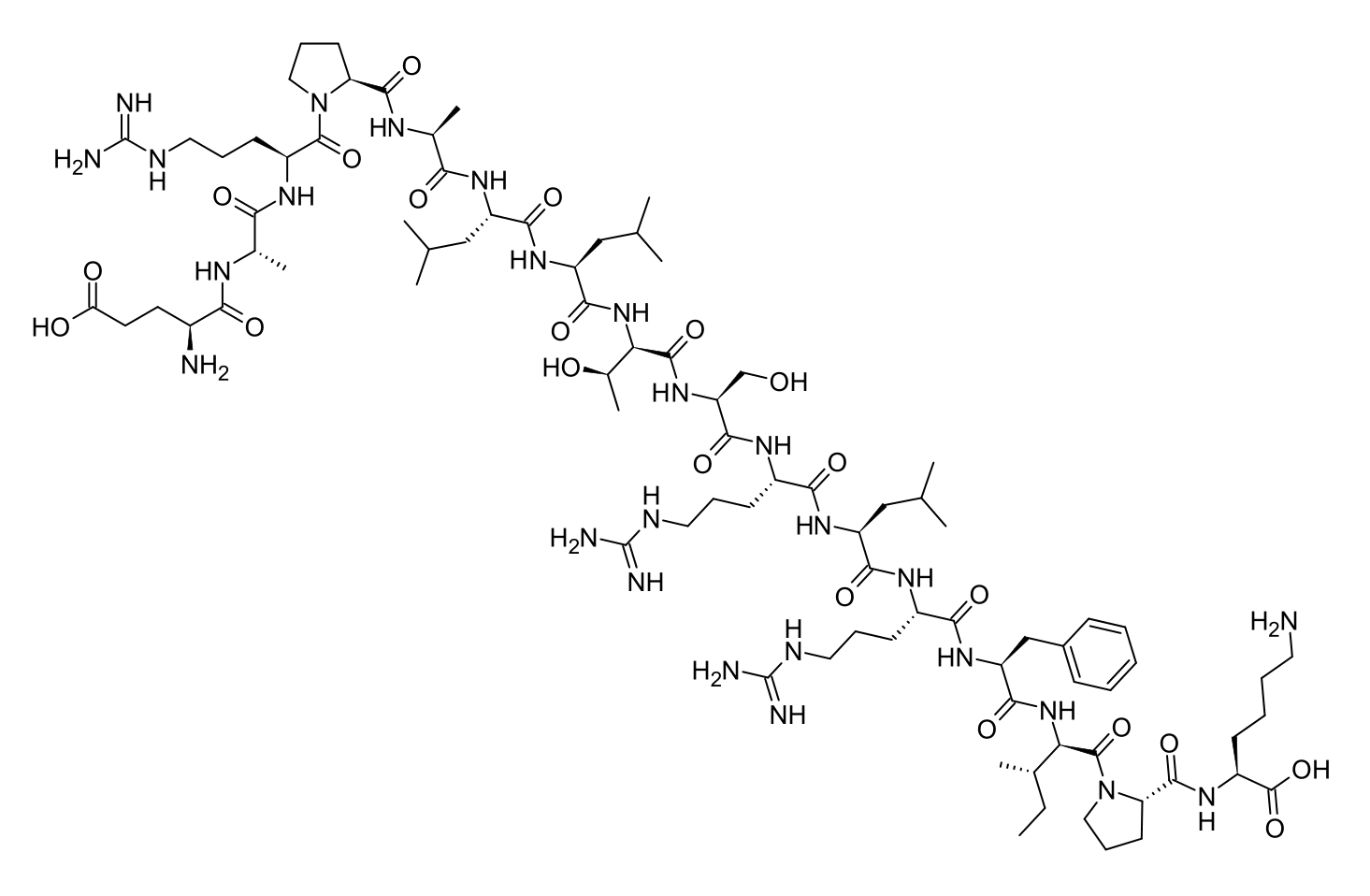
– GV1001 structure.png, by Meodipt (talk) (Public domain, via wikimedia-commons): https://commons.wikimedia.org/wiki/File:GV1001_structure.png