Antimicrobial peptides: why lab promise still stalls in the clinic
News
New reviews explain why antimicrobial peptides keep stalling in the clinic, and early mouse and cell studies test the next design ideas.

Antimicrobial peptides have looked like a promising answer to drug-resistant bacteria for decades, yet very few have reached routine clinical use. Two new reviews set out why: toxicity, poor stability in the body, late-stage trial failures, and research data scattered across databases that don’t agree with each other [1, 2]. A handful of fresh animal and cell studies show what researchers are trying next, but none of that work has been tested in people [4, 5].
Key takeaways
- A 2026 critical review says recent late-stage failures of the peptide candidates murepavadin and surotomycin point to ongoing problems with whole-body toxicity and with how the drugs behave in the body (pharmacokinetics) [1].
- A separate review compared five widely used antimicrobial peptide databases. It found that no single one meets all research needs, and it called for more standardized, interoperable data [2].
- The human peptide LL-37 can push cells toward death or survival depending on cell type and concentration, according to a review of the apoptosis literature [3]. That complexity matters for any medical use.
- New design strategies, such as peptides that carry a light-triggered gas payload or that work through bone repair signaling, have so far been studied only in cells and animals [4, 5].
Why the clinic is harder than the lab dish
Antimicrobial peptides are small proteins that form part of the body’s innate immune defenses [1]. Researchers are interested in them because they act against a broad range of microbes. Their mechanisms are also thought to make it harder for bacteria to develop resistance than with many conventional antibiotics [1]. The review in Current Protein & Peptide Science frames this interest against the wider antimicrobial resistance problem, citing a projection of 10 million deaths a year by 2050 [1].
The same review is direct about the gap between lab results and patient outcomes. It is a narrative review, not a new experiment, and it does not pool trial data. Even so, it highlights recent late-stage failures of murepavadin and surotomycin [1]. The authors say these setbacks show two persistent hurdles [1]:
- Systemic toxicity. Peptides that damage bacterial membranes can also harm human cells when given throughout the body.
- Pharmacokinetics. Peptides can break down quickly or fail to reach useful levels at the infection site.
The review also notes that these peptides do more than punch holes in bacterial membranes. Some also adjust immune responses or act on targets inside the bacterial cell [1]. That broader picture is scientifically interesting, but it also makes it harder to predict effects in a whole organism.
As for where the field is heading, the authors describe a shift from finding natural peptides to engineering them on purpose. That includes computational design, artificial intelligence, and peptidomimetics (synthetic molecules that mimic peptides), all aimed at better stability and lower toxicity [1]. They also discuss pairing peptides with conventional antibiotics and using targeted delivery systems [1]. These are presented as strategies to assess, not as proven solutions.
A data problem, too
Computational and AI-driven design depends on good training data, and a second 2026 review, in Peptides, suggests that data is uneven [2]. The authors compared five widely used general databases: APD, CAMP, DBAASP, dbAMP and DRAMP. They read each database’s publications and directly tested its current contents, search systems and analysis tools [2].
They found the databases differ markedly in scope, in how they organize data, in how deeply they annotate entries, and in how easy they are to search and reuse [2]. Each has different strengths. Some are stronger on biological annotation, some on sequence and family analysis, some on experimental activity data, and some on information about therapeutic development [2]. No single resource covered everything, and the authors called for more standardized, interoperable approaches [2].
This is a comparison of tools, not a study of peptides’ effects. Its relevance is indirect: if activity data are recorded under different conditions and formats, comparing candidates or training design models becomes less reliable [2].
LL-37: one peptide, opposite effects
LL-37 is the only cathelicidin peptide made by humans. A 2026 review in the International Journal of Molecular Sciences summarizes research on how it affects apoptosis, the cell’s built-in program for self-destruction [3]. According to the review, LL-37 can either promote or block apoptosis. Which effect wins depends on factors such as cell type and peptide concentration [3]. The review also covers LL-37 derivatives [3].
The authors argue that understanding these mechanisms is needed before the peptide’s potential can be judged in conditions including cancer [3]. The abstract does not say how many studies were reviewed or how much of the evidence comes from cell cultures versus animals or people. Readers should not take it as evidence of any clinical benefit. Its main message is that the same peptide can act in opposite directions, which is a caution for anyone designing medicines around it.
Next-generation designs: early animal and cell work
Peptides carrying a gas payload
One new laboratory study, published in the Journal of Controlled Release, attached a light-sensitive carbon monoxide donor called 3-hydroxyflavone to the start of antimicrobial peptides [4]. The aim was to load a precise, controllable amount of the gas-releasing molecule onto each peptide, because carbon monoxide is reactive and hard to deliver [4].
The researchers changed the amino acid order to make different versions of the conjugate. These versions assembled into different structures and released carbon monoxide in different patterns when exposed to light [4]. In cell-based experiments, these release patterns increased antibacterial and anti-inflammatory activity to different degrees [4]. In an animal model of infected wounds, the conjugates reduced bacteria at the wound site, changed the local inflammatory environment, and were associated with faster wound closure [4].
The limits are important. The abstract does not name the animal species, give sample sizes, or say which bacteria were tested. The approach relies on light activation, and no human data exist [4]. Results in animal wounds do not show safety or effectiveness in people.
A natural peptide’s role in bone repair
A second study looks beyond infection. This preprint, posted on bioRxiv and not yet peer reviewed, studied the mouse cathelicidin peptide (CAMP) during fracture healing [5]. Using single-cell RNA sequencing and tissue staining, the researchers found higher CAMP levels during fracture repair in young mice than in aged mice [5].
Removing the Camp gene, either throughout the body or only in myeloid immune cells, slowed fracture repair in young mice [5]. In aged mice, the opposite happened: removing Camp increased new bone formation in the healing callus [5]. Bone marrow transplants between young and old animals pointed to blood-derived immune cells as the source of these effects [5]. The authors propose that CAMP drives bone-forming cells through a signaling chain involving the P2X7 receptor and NLRP3 [5].
This is mouse genetics, and the abstract does not give animal numbers. The work has not been through peer review, and mouse cathelicidin is not identical to human LL-37 [5]. The study’s main finding cuts both ways: the same peptide appeared to help bone repair in young animals and to hold it back in old ones [5]. That echoes the context-dependence described for LL-37 [3].
What we still don’t know
- Whether engineered peptides can overcome the toxicity and pharmacokinetic problems that stalled recent late-stage candidates. The review identifies these barriers but does not show they have been solved [1].
- Whether peptide–antibiotic combinations and targeted delivery systems work in human trials, rather than in early-stage research [1].
- How much better design models would become with standardized, interoperable data [2].
- How LL-37’s opposite effects on cell survival play out in human tissue, and at what concentrations [3].
- Whether light-triggered carbon monoxide release from peptides is safe or practical outside animal models, and in which infections [4].
- Whether the age-dependent role of cathelicidin in mouse bone repair holds up after peer review, and whether anything similar happens in people [5].
References
- Advances in Antimicrobial Peptides: Design, Mechanism, and Clinical Application-A Critical Review. Current Protein & Peptide Science (2026). doi:10.2174/0113892037467494260912090514
- Antimicrobial peptide databases: A detailed comparison and complementary features. Peptides (2026). doi:10.1016/j.peptides.2026.171523
- Apoptosis Modulation by LL-37: From Mitochondrial Cell Death to Prosurvival Signaling. International Journal of Molecular Sciences (2026). doi:10.3390/ijms27188351
- Sequence-dependent self-assembly and carbon monoxide release of peptide–flavonoid conjugates for infected wound healing. Journal of Controlled Release (2026). doi:10.1016/j.jconrel.2026.115446
- Age-Dependent Effects of Macrophage Derived Cathelicidin Antimicrobial Peptide on Bone Fracture Repair. bioRxiv : the preprint server for biology (2026). doi:10.64898/2026.09.29.755446
Image credits
Free to use (CC0 / public domain); credited as a courtesy.
- Staphylococcus Aureus (NIH BioArt 773 – 792620).png, by Courtesy of NIAID
Ryan Kissinger (Public domain, via wikimedia-commons): https://commons.wikimedia.org/wiki/File:Staphylococcus_Aureus_(NIH_BioArt_773_-_792620).png
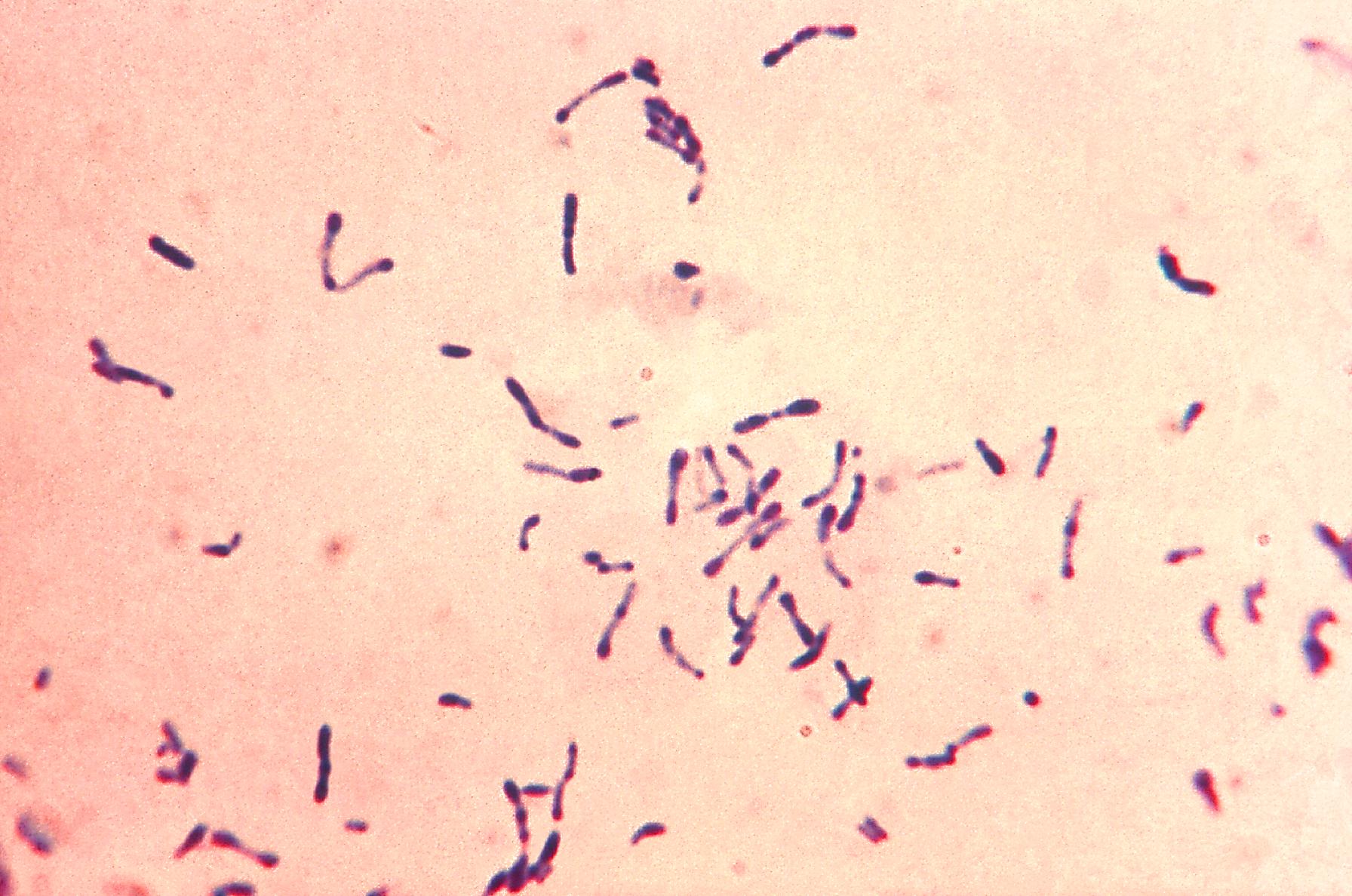
– Corynebacterium diphtheriae Gram stain.jpg, by Photo Credit:
Content Providers(s): (Public domain, via wikimedia-commons): https://commons.wikimedia.org/wiki/File:Corynebacterium_diphtheriae_Gram_stain.jpg