Three small studies test new twists on radioligand therapy for NETs
News
An albumin-binding variant, liver-artery delivery and an immunotherapy pairing each show early signals in small trials, with real toxicity trade-offs.
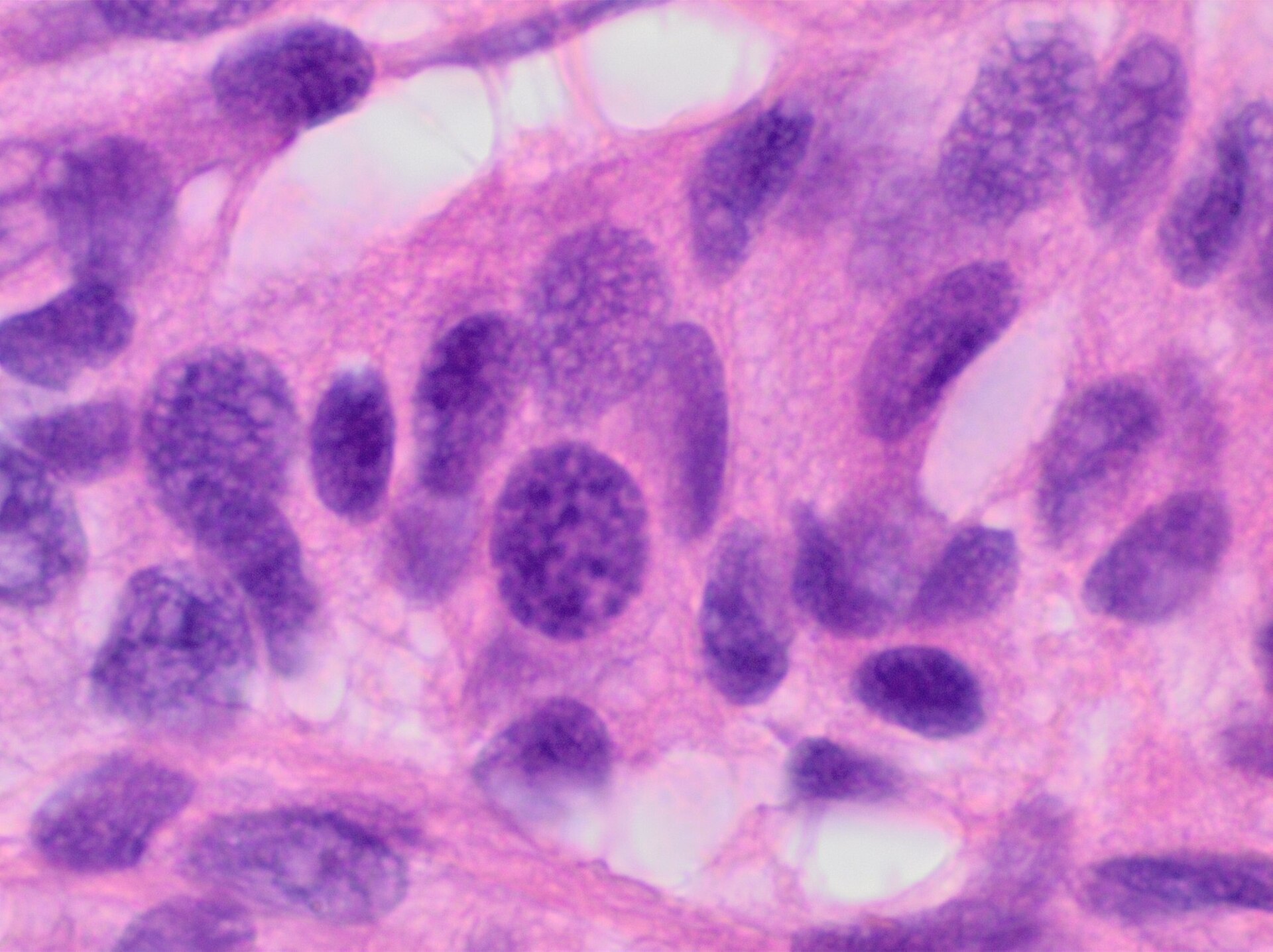
Peptide receptor radionuclide therapy (PRRT) with lutetium-177 dotatate is an established option for advanced gastroenteropancreatic neuroendocrine tumors (NETs) [4, 5]. Three small clinical studies published in 2026 test ways to push it further: a version that stays in the blood longer, delivery straight into the liver’s arteries, and pairing it with a checkpoint-inhibitor immunotherapy [1, 2, 3]. Each reports early signals, but each also comes with limits, and two show clear safety trade-offs.
Key takeaways
- A longer-circulating, albumin-binding version (lutetium-177 DOTA-EB-TATE) was tested in 6 people; blood-count toxicity, not kidney damage, turned out to be the limiting problem [2].
- Giving lutetium-177 dotatate into the liver’s arteries first was feasible in all 10 people in a pilot study and delivered more radiation to liver tumors than the usual vein route [3].
- Adding the checkpoint inhibitor pembrolizumab in 26 people with higher-grade NETs produced a 35% response rate, but serious adverse events occurred in 54%, and the authors say any added benefit remains unclear [1].
- None of these studies had a comparison group that received standard PRRT alone, so none can show the new approach works better [1, 2, 3].
How radioligand therapy works, and where it falls short
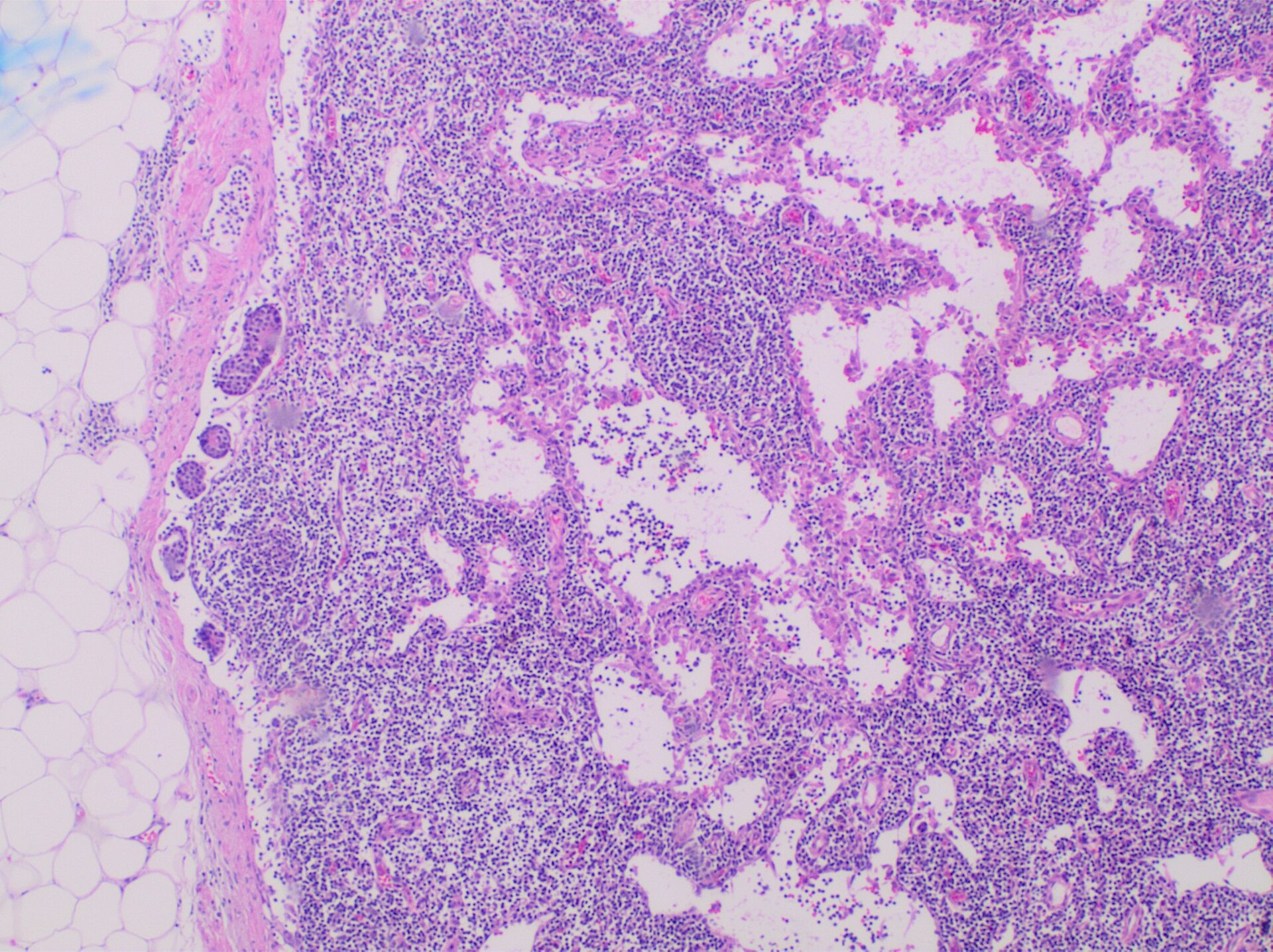
Many well-differentiated NETs carry somatostatin receptors on their surface. PRRT links a radioactive atom, here lutetium-177, to a peptide that binds those receptors, so radiation is carried to tumor cells [2, 3].
The studies point to several weak spots. The standard agent clears quickly from the blood, which may limit how much radiation reaches tumors [2]. Liver-dominant spread is common and strongly affects outlook [3]. In faster-growing tumors (Ki-67 index above 10%), responses to PRRT may not last [1].
Other work shows that details such as how much unlabeled peptide is in each preparation can shift radiation toward healthy organs like the spleen and kidneys. A retrospective review of 166 patients found higher spleen uptake after a switch in lutetium formulation, which the authors linked to differences in peptide mass [5]. That is a reminder that small technical changes can alter where radiation goes.
A longer-circulating version: lutetium-177 DOTA-EB-TATE
What kind of study: a phase 1 dose-escalation and dosimetry study in people [2].
In whom: six adults with inoperable, measurable gastroenteropancreatic NETs (WHO grade 2 or 3) with somatostatin receptor overexpression [2].
The idea: the agent is linked to Evans blue, a dye that binds albumin in the blood. This keeps it circulating longer, with the aim of raising tumor uptake [2]. The study used a shortened two-treatment schedule, with radiation estimates after the first treatment used to individualize the second [2].
What it found: side effects reported in the abstract were mild, including nausea, fatigue and hair loss, and no kidney toxicity was seen [2]. Kidney radiation doses were higher than those reported for standard lutetium-177 dotatate [2]. The limiting problem was the bone marrow: one patient developed persistent grade 3 febrile neutropenia (a dangerous drop in infection-fighting white cells with fever), and this was confirmed in an external cohort [2]. The authors therefore set a lower recommended activity for phase 2 to avoid irreversible marrow suppression [2].
At 3 months, five patients had stable disease and one had a partial response [2]. Disease had progressed in two patients by 6 months after treatment ended [2].
Limits: six patients is too few to judge effectiveness, and there was no control group [2]. The same feature meant to help, longer time in the blood, is what exposed the marrow to more radiation [2].
Delivering it straight into the liver
What kind of study: a prospective pilot clinical trial in people [3].
In whom: ten consecutive adults with progressive, non-resectable, liver-dominant gastroenteropancreatic NETs that expressed somatostatin receptors [3].
The idea: rather than giving every treatment into a vein, the first two treatments were delivered through a catheter guided into the hepatic arteries, with the amount adjusted to liver tumor volume, followed by two standard intravenous treatments [3]. The goal was to concentrate radiation in liver tumors while still reaching disease elsewhere [3].
What it found: the arterial procedure was completed in all 10 patients, and radiation exposure to staff and patients stayed within regulatory limits with no contamination events [3]. Dosimetry suggested the arterial route delivered more than three times the radiation dose to liver metastases than the intravenous route, though the authors note the tumors may already have been responding by the time of the comparison [3]. On imaging, median liver lesion uptake was 86% higher with arterial delivery [3].
One severe adverse event, a tear in the lower esophagus, was reported and was not attributed to the delivery route [3]. Partial responses were reported in 67% of patients at the 3-month follow-up and 87% at 6 months, using RECIST and volumetric criteria [3].
Limits: ten patients and no randomized comparison mean the response figures are hard to interpret [3]. The route comparison was within the same patients at different times, which the authors acknowledge could be affected by earlier treatment [3]. The abstract does not explain how 87% maps onto a group of 10, so the number of evaluable patients is unclear [3]. The approach also requires catheter-based procedures and specialized radiation safety work [3].
Adding a checkpoint inhibitor
What kind of study: a single-arm prospective pilot study in people [1].
In whom: 26 adults with metastatic, well-differentiated, somatostatin receptor-positive NETs with a Ki-67 index above 10%, including 20 with grade 3 tumors [1].
The idea: checkpoint inhibitors given alone produce low response rates in these tumors [1]. The hypothesis was that radiation from PRRT might prime the immune system so that the PD-1 inhibitor pembrolizumab, given at the same time, works better [1].
What it found: the objective response rate was 35%, median progression-free survival was 13.3 months, and median overall survival was 24.1 months [1]. Serious adverse events occurred in 14 of 26 patients (54%), which the authors describe as higher than expected for PRRT alone [1]. The most common immune-related events were grade 1 or 2 liver inflammation (7 patients), grade 2 underactive thyroid (5) and diabetes (4) [1].
In exploratory blood tests, patients who responded tended to have more proliferating CD8+ T cells and fewer CD14+ myeloid-derived suppressor cells at baseline [1]. That is an association in a small group, not a validated way to predict response [1].
Limits: with no PRRT-only comparison arm, the study cannot separate the effect of the combination from PRRT alone, and the authors conclude the added benefit remains unclear [1].
Who might respond: a note from hereditary NETs
A separate retrospective cohort study compared 19 people with MEN1, an inherited syndrome that causes NETs, with 57 people with sporadic pancreatic NETs, all of whom had received lutetium-177 dotatate [4]. Progression-free survival, overall survival, response rates and grade 3 or higher toxicity did not differ significantly between the groups [4]. As a retrospective study with a small MEN1 group, it cannot rule out modest differences [4]. It does illustrate that patient selection is an active research question alongside the newer strategies.
What we still don’t know
- Is any of these better than standard PRRT? None of the three studies randomized patients against standard lutetium-177 dotatate, so better outcomes cannot be claimed [1, 2, 3].
- Can marrow toxicity be managed with the albumin-binding agent? The phase 1 study set a lower recommended level, but whether that keeps enough tumor effect needs phase 2 testing [2].
- Do liver-focused gains last, and for whom? Follow-up in the intra-arterial study ran to 6 months in 10 patients; longer follow-up and larger groups are needed [3].
- Is the immunotherapy pairing worth its added toxicity? A 54% serious adverse event rate needs to be weighed against benefit that has not yet been shown [1].
- Can blood markers pick likely responders? The immune cell findings are early and would need confirmation in independent groups [1].
- How much do preparation details matter? Peptide mass and formulation can shift radiation to healthy organs, which could also affect how new approaches are compared [5].
References
- Pembrolizumab and Peptide Receptor Radionuclide Therapy for Patients with Metastatic Well-Differentiated Neuroendocrine Tumors. Clinical Cancer Research (2026). doi:10.1158/1078-0432.CCR-26-1617
- Next-Generation Peptide Receptor Radionuclide Therapy: A Phase 1 Dose-Escalation and Dosimetry Study of177Lu-DOTA-EB-TATE. Journal of Nuclear Medicine (2026). doi:10.2967/jnumed.126.272756
- Optimizing the Therapeutic Index: Sequential Intraarterial–Intravenous PRRT with Personalized Volumetric-Adjusted Dosing. Journal of Nuclear Medicine (2026). doi:10.2967/jnumed.126.272710
- Applying 177Lu-DOTATATE for hereditary neuroendocrine tumours: the role in MEN1. Endocrine-Related Cancer (2026). doi:10.1530/ERC-25-0514
- Transitioning from CA to NCA 177Lu in the preparation of [177Lu]Lu-DOTATATE for PRRT – observations and considerations from a retrospective review. Physical and Engineering Sciences in Medicine (2026). doi:10.1007/s13246-026-01805-4
Image credits
Free to use (CC0 / public domain); credited as a courtesy.
- Histopathology of pancreatic well-differentiated neuroendocrine tumor with vesicular and salt-and-pepper chromatin.jpg, by Mikael Häggström, M.D. Author info – Reusing images- Conflicts of interest: None
Mikael Häggström, M.D.Consent note: Consent from the patient or patient’s relatives is regarded as redundant, because of absence of identifiable features (List of HIPAA identifiers) in the media and case information (See also HIPAA case reports guidance). (CC0, via wikimedia-commons): source - Histopathology of lymph node metastasis from a well differentiated neuroendocrine tumor of the midgut, original.jpg, by Mikael Häggström, M.D. Author info – Reusing images- Conflicts of interest: None
Mikael Häggström, M.D.Consent note: Consent from the patient or patient’s relatives is regarded as redundant, because of absence of identifiable features (List of HIPAA identifiers) in the media and case information (See also HIPAA case reports guidance). (CC0, via wikimedia-commons): source

