Setmelanotide research: rethinking who has melanocortin obesity
News · Setmelanotide
A genetic study questions NCOA1 as an obesity gene, a hunger measure is validated, and a letter recasts acquired hypothalamic obesity as α-MSH deficiency.
Three new papers change who researchers think belongs in the group of melanocortin-pathway obesities, the rare conditions in which setmelanotide has been studied. One large genetic study finds no link between NCOA1 variants and obesity, even though carriers of these variants were included in a setmelanotide trial [1]. A second paper tests a single-question hunger measure for these diseases using phase 3 trial data [2]. A third argues that obesity after hypothalamic injury should be understood as a hormone deficiency [3].
Key takeaways
- A case-control study in adults and children, replicated in the UK Biobank, found no association between pathogenic NCOA1 variants and obesity or body mass index [1].
- The “Most Hunger” item, a 0-10 patient-reported question, showed moderate to good test-retest reliability and supported validity in people aged 12 and over with four MC4R pathway diseases [2].
- A letter, building on a recent trial report, proposes that acquired hypothalamic obesity works like an α-MSH deficiency, with downstream MC4R signalling still intact [3].
- None of the three papers is a new trial of setmelanotide’s effects. They are about genetics, measurement and how a condition is defined [1, 2, 3].
Background: the leptin-melanocortin pathway
The leptin-melanocortin pathway is a set of signals in the brain that helps control hunger and body weight [1]. Rare harmful variants in genes along this pathway can cause monogenic obesity, meaning obesity driven mainly by a single gene [1]. Setmelanotide is a melanocortin 4 receptor (MC4R) agonist, so it activates the receptor near the end of this pathway [1]. Because it acts at that point, researchers have studied it in conditions where the signal upstream of MC4R is thought to be missing or weak [1, 3].
The conditions covered in this research include leptin receptor (LEPR) deficiency, pro-opiomelanocortin (POMC) deficiency, Bardet-Biedl syndrome (BBS) and acquired hypothalamic obesity (HO) [2]. These often bring insatiable hunger and severe obesity [2]. That makes one question central: which people truly have a melanocortin-pathway problem?
NCOA1: a proposed obesity gene that does not hold up
NCOA1 encodes a protein called SRC-1, a nuclear receptor co-activator [1]. Earlier work had proposed that harmful NCOA1 variants cause monogenic obesity by weakening leptin’s ability to switch on POMC [1]. On that basis, NCOA1 variant carriers were included in the EMANATE setmelanotide trial [1].
The new study tested that idea in people [1]. It used case-control analyses in adults and children from the RaDiO study, comparing people with and without obesity [1]. The team added lab (in vitro) assays of the variants and then checked the results in a separate large dataset, the UK Biobank [1]. They found no association between pathogenic NCOA1 variants and obesity or body mass index [1].
What kind of evidence: a human genetic case-control study with in vitro work and replication in a population cohort [1]. The abstract does not give the number of participants [1].
Limits: a lack of association in a population does not rule out an effect in rare individuals or families. It also does not by itself show how NCOA1 carriers responded in the trial. Those results are not reported in this abstract [1]. The biological rationale for NCOA1 was real, the authors note, but human genetic data did not support it as a monogenic obesity gene [1]. The practical point is that gene lists used to select trial participants may need stronger human evidence.
Measuring hunger in rare MC4R pathway diseases
Hunger is a core symptom in these conditions, so researchers need a reliable way for patients to report it [2]. The second paper describes the development and testing of the Most Hunger item, a single question scored from 0 to 10 [2].
The work had two parts [2]. First, three separate qualitative interview studies asked people with LEPR or POMC deficiency, BBS and acquired HO whether the question made sense and captured their experience [2]. Participants understood the item and could rate their hunger with it [2]. They described unrelenting hunger before treatment and a reduction in hunger they considered meaningful after treatment [2].
Second, the team analysed answers collected during phase 3 setmelanotide trials in participants aged 12 and over [2]. The item showed moderate to good test-retest reliability, and its scores correlated with related measures as expected [2]. The authors also estimated how big a change counts as meaningful to an individual patient (the meaningful within-patient change, or MWPC) [2]. On the 0-10 scale, these thresholds were about 1.5-2.6 points for LEPR or POMC deficiency, 0.95-1.6 for BBS and 2.4-3.7 for acquired HO [2].
What kind of evidence: a qualitative and psychometric study using phase 3 trial data, registered as NCT03287960, NCT02896192, NCT03746522 and NCT05774756 [2]. The abstract does not give sample sizes [2].
Limits: the measure was tested only in people aged 12 and over, so it is not validated for younger children [2]. The data came from trials of a single drug, and patient descriptions of improvement are self-reports, not a controlled comparison of outcomes [2]. The thresholds also differ by condition, so a single cut-off cannot be applied across all groups [2]. The authors found that hunger levels were similar and high across these distinct diseases, with behaviour consistent with hyperphagia (extreme, persistent hunger) [2].
Acquired hypothalamic obesity as an α-MSH deficiency
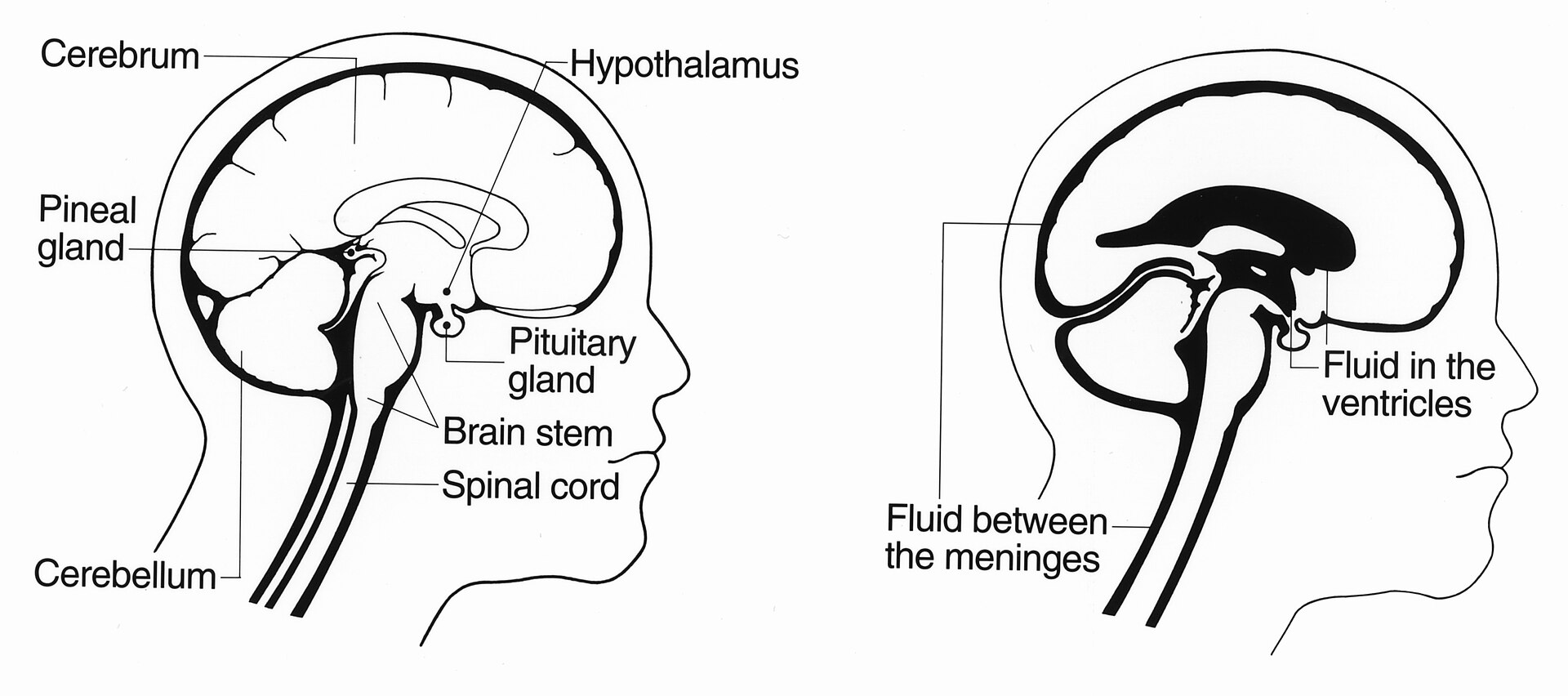
Acquired hypothalamic obesity can follow damage to the hypothalamus, the brain region that helps regulate appetite [3]. A letter in Molecular and Cellular Pediatrics builds on a recent trial report by Miller and colleagues [3]. The authors argue that acquired HO should be seen as an injury-caused loss of melanocortin tone, similar to a deficiency of α-melanocyte-stimulating hormone (α-MSH) [3].
α-MSH is a signal produced from POMC that normally activates MC4R [3]. The authors reason that the clinical response to setmelanotide seen in affected people suggests the MC4R-dependent pathways downstream are still working [3]. In their view, that pattern looks like a hormone deficiency, where the missing signal is the problem rather than the receptor [3]. They suggest this framework could change how acquired HO is diagnosed and managed [3].
What kind of evidence: a letter, which is commentary and interpretation, not new data [3]. It relies on another group’s trial results, which we have not reviewed directly here [3].
Limits: a response to an MC4R agonist fits the deficiency idea, but it does not prove the mechanism. The letter proposes a concept and its implications; it does not test diagnostic criteria [3].
How the three papers fit together
Taken together, the papers point at the same issue from different angles. One narrows the genetic definition by questioning NCOA1 [1]. Another widens the concept to include an acquired, injury-related form [3]. The third gives researchers a shared way to measure hunger across these groups, which matters when comparing them [2]. Each one bears on who is considered to have melanocortin-pathway obesity, and how benefit is judged in research [1, 2, 3].
What we still don’t know
- How NCOA1 variant carriers fared in the EMANATE trial, and whether any subgroup of carriers has a real pathway defect [1].
- How large the RaDiO and UK Biobank samples were for rare variant analysis, and how well they represent different ancestries; the abstract does not say [1].
- Whether the Most Hunger item works in children under 12, and how it performs outside trials of a single drug [2].
- Whether measurable markers can confirm an α-MSH deficiency in acquired HO, or identify who fits the proposed framework [3].
- How the proposed reframing of acquired HO would translate into diagnostic criteria, which the letter discusses but does not test [3].
References
- Human genetic evidence challenges NCOA1 as a monogenic obesity gene. Cell Reports Medicine (2026). doi:10.1016/j.xcrm.2026.103106
- Measuring Hunger Severity in Rare MC4R Pathway Diseases: Development and Psychometric Evaluation of the Most Hunger Item. Advances in Therapy (2026). doi:10.1007/s12325-026-03741-x
- Acquired hypothalamic obesity as α-MSH deficiency syndrome: a paradigm shift with therapeutic impact. Molecular and Cellular Pediatrics (2026). doi:10.1186/s40348-026-00260-1
Image credits
Free to use (CC0 / public domain); credited as a courtesy.

