Amylin, CGRP’s cousin: what a new migraine blood study found
News
A Danish study of 121 adults with migraine and 63 controls found blood amylin levels did not set migraine apart or predict response to erenumab.
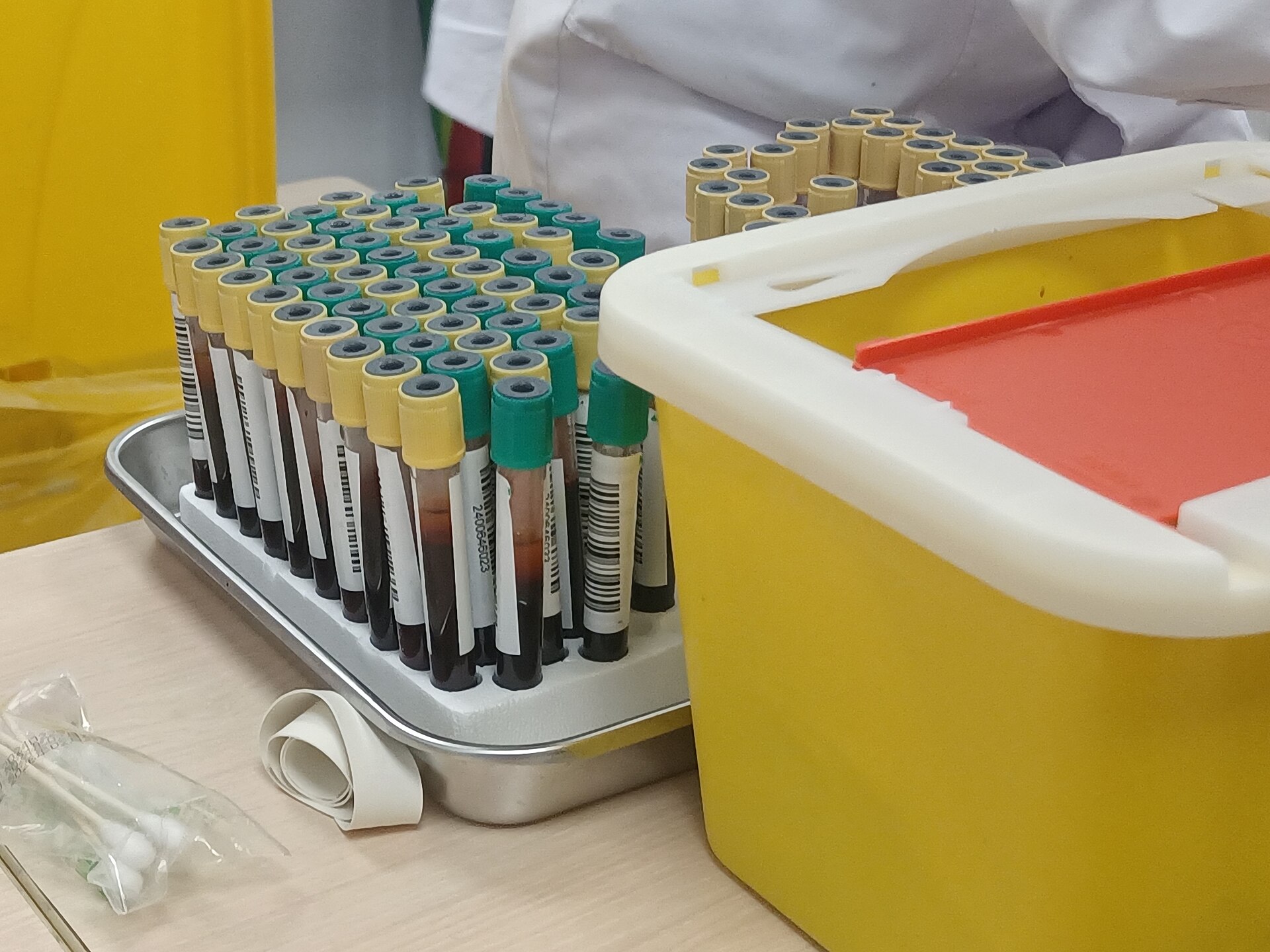
A new Danish study asked a simple question: does the level of amylin in the blood differ in people with migraine, or tell us who will respond to the CGRP-receptor antibody erenumab? In 121 adults with migraine and 63 healthy controls, the answer was no on every count tested [1]. That negative result matters because amylin is a close chemical relative of CGRP, the peptide at the centre of several migraine drug classes, and it is also showing up in newer multi-hormone drugs being studied for obesity and kidney disease [1, 2, 3].
Key takeaways
- In a prospective cohort, blood amylin levels did not differ between adults with migraine and healthy controls [1].
- Baseline amylin did not separate people who later responded to erenumab from those who did not, and levels did not change over 24 weeks of treatment [1].
- The authors conclude that plasma amylin is not a useful blood biomarker for migraine or erenumab response, while noting that the signalling that matters may not show up in arm-vein blood [1].
- Separately, recent reviews place amylin among the hormone pathways being combined with GLP-1 in newer drugs studied for obesity and kidney disease, an area where much evidence is still emerging [2, 3].
Why amylin and CGRP are linked
Amylin belongs to the calcitonin family of peptides and is closely related to calcitonin gene-related peptide (CGRP) [1]. The two peptides have overlapping receptor pharmacology, meaning they can act on some of the same receptor systems [1].
That overlap is why migraine researchers have paid attention to amylin. According to the study’s background section, human provocation studies have shown that pramlintide, a synthetic amylin analogue, can trigger migraine attacks [1]. Provocation studies deliberately give a substance to volunteers under controlled conditions to see whether it sets off an attack, so they test whether a pathway can cause symptoms, not whether it is overactive in everyday migraine.
What was still unclear, the authors write, was whether amylin circulating in the blood is different in people with migraine, varies across migraine types, or tracks with response to drugs that block the CGRP receptor [1].
The new study: who, what and how
Type of study: a prospective longitudinal analysis in people, carried out within a migraine registry study (the REFORM study) at a specialist headache centre in Copenhagen [1]. Prospective means participants were enrolled and then followed forward in time.
Who took part: adults with migraine who had at least four migraine days a month, plus healthy controls of similar age and sex, enrolled between September 2020 and June 2022 [1]. In total, 121 adults with migraine and 63 controls took part [1]. Of the migraine group, 100 people completed 24 weeks of erenumab and had usable data on how well it worked [1].
What was measured: blood samples were taken under standardised conditions at the start and again after 24 weeks of erenumab [1]. A person counted as a “responder” if their monthly migraine days fell by at least half during weeks 13 to 24 compared with the start [1]. Amylin was measured later, between November 2023 and March 2024, using a competitive immunoassay [1]. The team chose this assay after comparing kits head to head, including checks of how well each one handled human plasma (parallelism and spike-recovery tests) [1]. That validation step is worth noting, because peptide assays can vary a lot in quality.
What the study found
The short version: amylin looked much the same in every group.
- Responders vs non-responders at the start: 55 people responded to erenumab and 45 did not [1]. Their average baseline amylin levels were 9.0 and 8.6 ng/mL, a difference that was not statistically significant [1].
- Migraine vs healthy controls: controls averaged 9.2 ng/mL, and neither migraine group differed significantly from them [1].
- After 24 weeks: responders and non-responders still did not differ (8.8 vs 8.3 ng/mL) [1].
- Change over time: when each person’s start and 24-week samples were compared (n = 100), amylin levels did not change significantly [1].
- Migraine subtypes: baseline amylin did not differ between episodic and chronic migraine, between migraine with and without aura, or between samples taken during an attack and between attacks [1]. It was also not linked to key clinical variables [1].
The authors conclude that these results do not support plasma amylin as a clinically useful biomarker, either for identifying migraine or for predicting erenumab response [1]. They add that the findings fit a broader idea: peptide signalling relevant to migraine may be confined to specific tissues, such as parts of the nervous system, and may simply not be visible in blood drawn from a vein [1].
Limits of the study
A clean negative result is useful, but it has boundaries.
- Blood is not the brain. As the authors themselves suggest, a peripheral blood sample may miss what is happening where migraine actually starts [1]. “No difference in the blood” is not the same as “no role in migraine.”
- No comparison arm for the drug. Everyone in the migraine group received erenumab, so the study can say whether amylin tracked with response, not whether erenumab itself changes amylin compared with no treatment [1].
- Some participants not included in the efficacy analysis. Of 121 enrolled with migraine, 100 had evaluable 24-week data [1].
- One centre, one population. All participants came from a single Danish headache centre, so results may not generalise to other groups [1].
- Stored samples and a single assay. Samples were collected from 2020 to 2022 and measured in 2023 to 2024 with one validated immunoassay [1]. The abstract does not report how storage time might affect results.
Amylin beyond migraine: the multi-hormone drug context
Amylin is also part of a very different research story. Two recent reviews describe how drug developers are combining several gut and pancreatic hormone pathways in single molecules.
A review in Obesity Pillars looked at why people vary so much in weight loss on GLP-1 receptor agonists [2]. It is a structured literature review that builds a hypothesis-generating framework, not a new trial [2]. The authors map GIP, amylin and glucagon pathways onto possible biological “phenotypes” of obesity, such as appetite and satiety or reward-driven eating, as plausible ideas to test [2]. They stress that current evidence is not enough to say these phenotypes predict who responds better to which drug [2].
A review in the Journal of the American Society of Nephrology covers GLP-1 receptor agonists and newer multi-hormone receptor modulators that also target GIP, glucagon and amylin, in people with kidney disease who do not have diabetes [3]. It describes proposed direct effects on the kidney, such as changes in sodium handling and blood flow in the filtering units, alongside indirect effects through weight loss and lower blood pressure [3]. Importantly, the authors say the extra hormonal components may interact in ways that are additive, synergistic or even counteracting, and that these interactions remain incompletely understood [3]. The current human evidence comes mainly from secondary kidney endpoints in large obesity and cardiovascular trials, and dedicated kidney outcome trials are still under way [3].
A third review, in Hormones, surveys the diabetes drug pipeline more broadly, including incretin-based multi-agonists, weekly insulins, oral GLP-1 agonists and add-on agents for type 1 diabetes [4]. It does not single out amylin in its abstract, but it shows the wider shift towards drugs that act on several hormone pathways at once [4].
These reviews summarise others’ work and do not report new data, so they show where research attention is going rather than settled outcomes [2, 3, 4].
What we still don’t know
- Whether amylin signalling inside the nervous system, rather than in the blood, differs in people with migraine [1].
- How findings from pramlintide provocation studies fit with normal blood amylin levels in migraine [1].
- Whether other sample types or other forms of measurement would tell a different story; this study used one validated blood assay [1].
- Whether amylin-containing multi-hormone drugs have any effect, helpful or harmful, on migraine; none of the sources here address that question [1, 2, 3].
- How the amylin component interacts with GLP-1, GIP and glucagon pathways in the kidney and in weight regulation, and whether biological phenotypes can guide drug choice [2, 3].
- What dedicated kidney outcome trials of multi-hormone receptor modulators will show [3].
References
- Plasma amylin levels in migraine and after erenumab treatment: A REFORM study. Headache: The Journal of Head and Face Pain (2026). doi:10.1111/head.70193
- Determinants of variable response to GLP-1 receptor agonists: A mechanism-informed framework for precision treatment of obesity. Obesity Pillars (2026). doi:10.1016/j.obpill.2026.100339
- Glucagon-Like Peptide-1 Receptor Agonists and Multi-hormone Receptor Modulators for Kidney Protection in Nondiabetic Kidney Disease. Journal of the American Society of Nephrology (2026). doi:10.1681/ASN.0000001306
- Antidiabetic medications in the pipeline. Hormones (2026). doi:10.1007/s42000-026-00780-5
Image credits
Free to use (CC0 / public domain); credited as a courtesy.

