BPC-157 in humans: a systematic review finds just 30 people studied
News · BPC-157
A new systematic review found three small, uncontrolled human studies of BPC-157 (n=30), while most of its reputation rests on rodent research.

BPC-157 has a large following among athletes, but a new systematic review found only three human studies of it, with 30 participants in total and no control groups [1]. A separate critical review of rodent ischemia-reperfusion research shows how much of the peptide’s reputation comes from animal experiments [2]. Read together, the two papers show a wide gap between how popular BPC-157 is and what has been shown in people.
Key takeaways
- A PRISMA-compliant systematic review registered in advance with PROSPERO found just three human studies of BPC-157 (n=30). All were small and uncontrolled, and the certainty of evidence was rated very low [1].
- The review’s authors concluded that BPC-157 should not be used clinically in humans outside ethically approved, regulated, high-quality clinical trials [1].
- A critical review of rodent ischemia-reperfusion studies found protective signals across several organs. It also found short follow-up, single-dose designs and unclear risk of bias, and described BPC-157 as a hypothesis-generating candidate rather than an established therapy [2].
- A recent report of three dental nerve-injury cases adds no controlled evidence. Its authors state that causality cannot be established [3].
What BPC-157 is, and why the evidence question matters
BPC-157 (“Body Protective Compound-157”) is a synthetic peptide made of 15 amino acids. It is popular in athletic circles for recovery from musculoskeletal injury, even though it has no regulatory approval for human use and most of the evidence comes from animal models [1].
That mismatch is the reason a systematic look at the human data matters. A peptide can produce consistent results in rats and still fail, or cause harm, in people. The only way to find out is through well-designed human studies, and those are what the new review set out to find.
The systematic review: three studies, 30 people
What kind of study: a systematic review that followed PRISMA reporting guidance and was registered in advance with PROSPERO (CRD420261406325) [1]. The authors searched Embase, PubMed, the Cochrane Library and ClinicalTrials.gov up to 1 June 2026. They included any quantitative or qualitative study of BPC-157 in human participants, for any condition [1].
They rated study quality with a National Institutes of Health tool designed for before-after studies with no control group. They rated certainty of evidence with the GRADE framework. Because the studies were too few and too different to pool, the results were summarised in narrative form following SWiM guidance [1].
What they found: only three studies met the criteria, with 30 participants in total [1]:
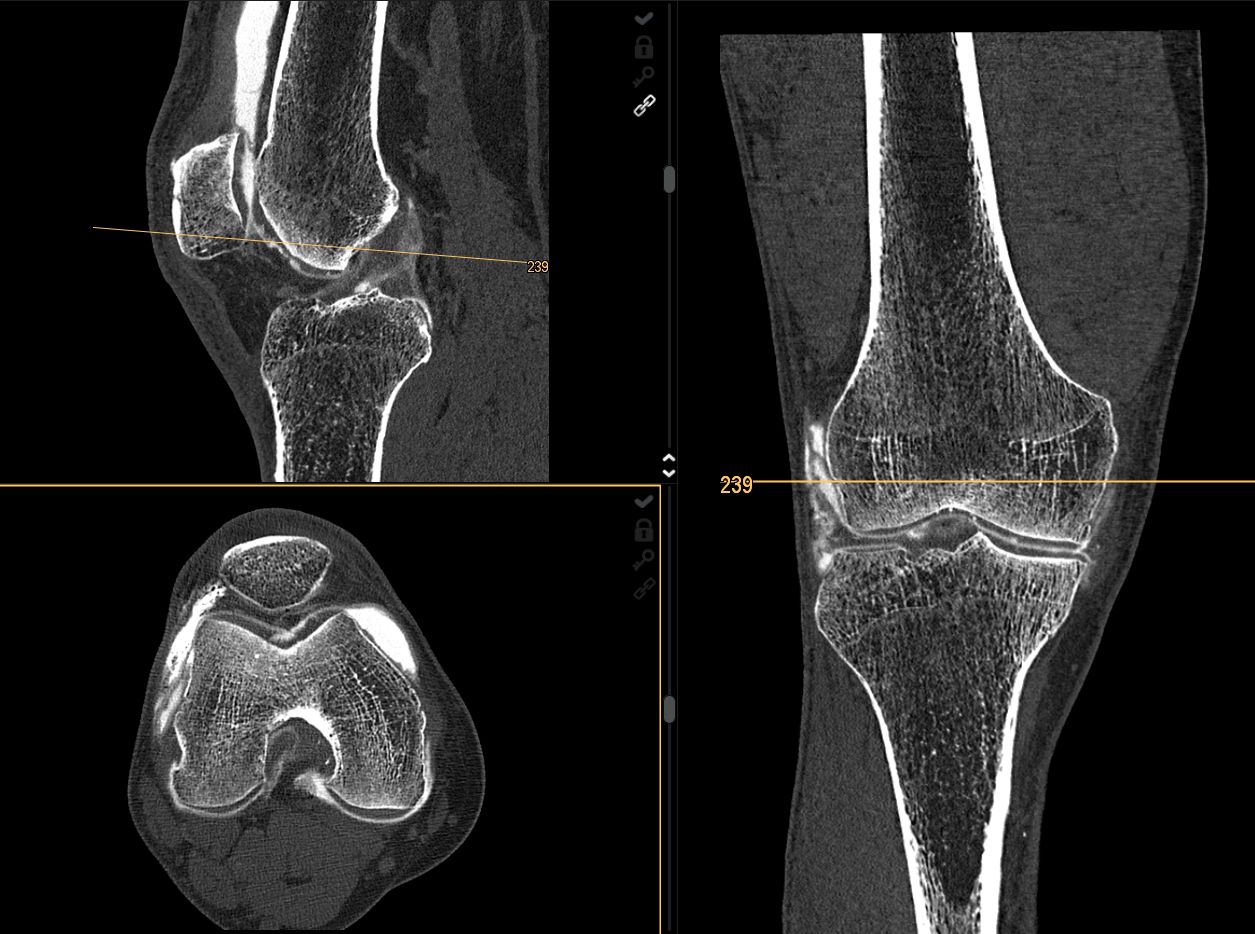
- a retrospective study of BPC-157 injected into the knee joint for knee pain (n=16);
- a retrospective pilot study of BPC-157 delivered into the bladder for interstitial cystitis (n=12);
- a prospective pilot study of intravenous BPC-157 that looked mainly at safety (n=2).
All three studies reported that most participants’ symptoms improved, and none reported treatment-related adverse events [1]. The reviewers judged all three to be of poor methodological quality [1].
Limits: the overall certainty of evidence was rated very low. The reviewers gave three reasons: serious risk of bias, indirectness and imprecision [1]. In practice, this means none of the studies had a comparison group, two looked back at existing records rather than following people forward, and the samples were too small to detect anything but the largest effects. With no placebo or control group, symptom improvement could reflect natural recovery, expectation effects or other care that participants received at the same time.
The lack of reported side effects should be read the same way. Thirty people across three different conditions and delivery routes cannot show whether a compound is safe. Rare or delayed harms would be very unlikely to appear in a sample that size.
The animal evidence: a critical review of rodent ischemia-reperfusion studies
What kind of study: a critical review of preclinical research [2]. Ischemia-reperfusion injury is tissue damage that happens when blood flow returns after a period of interrupted supply. The authors searched PubMed/MEDLINE, Web of Science, Scopus, PMC, publisher metadata, ClinicalTrials.gov, and FDA and WADA materials up to 24 June 2026 [2].
The core evidence was peer-reviewed rodent studies. The authors assessed each one by model, dose, route, timing, outcomes and methodological limits [2]. They treated cell, vessel-ring, human ex vivo and regulatory sources only as background, not as evidence that the peptide works against ischemia-reperfusion injury [2]. They did not perform a meta-analysis because the studies differed too much in organs, injury models, doses, routes, timing and outcomes [2].
What they found: across the rodent studies, BPC-157 was associated with less oxidative injury, changes in nitric oxide-related vascular responses, lower inflammatory and apoptotic markers, and changes in VEGF/VEGFR2-Akt-eNOS signalling [2]. The organ-specific findings included the following [2]:
- biochemical, molecular and tissue-level protection in leg skeletal-muscle injury;
- less damage to distant organs after limb injury;
- neuronal and functional effects in the hippocampus;
- vascular and tissue-protective responses in the intestine and colon;
- circulatory and tissue effects in a liver injury model.
Limits: the authors describe the evidence base as heterogeneous. Many studies had short observation periods, used a single dose, and did not fully report risk-of-bias domains [2]. They also caution that systemic and major-vessel occlusion models add mechanistic context but are not equivalent to conventional organ-specific ischemia-reperfusion injury [2].
All of these results come from rodents. They do not show that BPC-157 has the same effects in people. The authors call the peptide a hypothesis-generating candidate for further preclinical research rather than an established therapy [2].
A case report on nerve injury adds little
What kind of study: a narrative review combined with three clinical case reports [3]. The topic was injury to the inferior alveolar nerve, a known complication of oral and jaw surgery.
What it found: the authors write that experimental evidence suggests BPC-157 and two other peptides may affect processes involved in nerve repair, including inflammation, cell protection, blood-vessel signalling and Schwann cell biology [3]. They note that these effects have been shown mainly in preclinical models and have not been established in patients with this injury [3]. The three patients received a combination that included peptide agents, dexamethasone and a local anaesthetic, and all three showed sensory recovery during follow-up [3].
Limits: there was no control group, and the peptides were given alongside other drugs. The authors state that spontaneous recovery and other confounding factors cannot be ruled out, and that causality cannot be established [3]. They describe peptide-based approaches as investigational, with open questions about safety, delivery and long-term outcomes [3].
Popularity versus proof
Taken together, the three papers point the same way. The rodent research is varied and in places consistent, but it is limited by design weaknesses and has not been independently replicated in blinded studies [2]. The human research consists of a few dozen people in uncontrolled studies whose evidence was rated very low certainty [1], plus individual case reports that cannot separate the peptide’s effect from everything else that happened [3].
None of this shows that BPC-157 does not work. It shows that the question has not yet been properly tested in people.
What we still don’t know
- Whether it does anything in humans. No randomised, placebo-controlled trial was found in the systematic review [1].
- Whether it is safe in humans. Thirty participants with no reported treatment-related adverse events cannot rule out rare, delayed or dose-related harms [1].
- How it behaves in the body. The rodent review calls for pharmacokinetic and pharmacodynamic studies, dose-response and therapeutic-window work, and rigorous toxicology [2].
- Whether the animal findings hold up. Independent, blinded replication of the rodent results is still needed [2].
- Which outcomes matter. Standardised outcome measures and controlled trials are needed in specific conditions such as nerve injury [3].
Until controlled human studies are done, the reviewers’ view is that BPC-157 belongs in ethically approved, regulated, high-quality clinical trials and not in clinical use [1].
References
- Human evidence for BPC-157 in orthopaedic and regenerative medicine: a systematic review of efficacy and safety. Acta Orthopaedica Belgica (2026). doi:10.52628/92.3.15837
- BPC 157 in Rodent Ischemia–Reperfusion Injury: A Critical Review of Preclinical Evidence. International Journal of Molecular Sciences (2026). doi:10.3390/ijms27188344
- Case Report: Regenerative peptides for Inferior alveolar nerve injury: a narrative review with hypothesis-generating three clinical cases. Frontiers in Oral Health (2026). doi:10.3389/froh.2026.1907109
Image credits
Free to use (CC0 / public domain); credited as a courtesy.


More on BPC-157
Open the hubTracking my questions for my doctor (demo)
BPC-157 · Member story