Can antimicrobial peptides slow antibiotic resistance? New lab clues
News
Lab studies test insect and engineered antimicrobial peptides against drug-resistant bacteria. All are cell-culture work, not evidence in people.
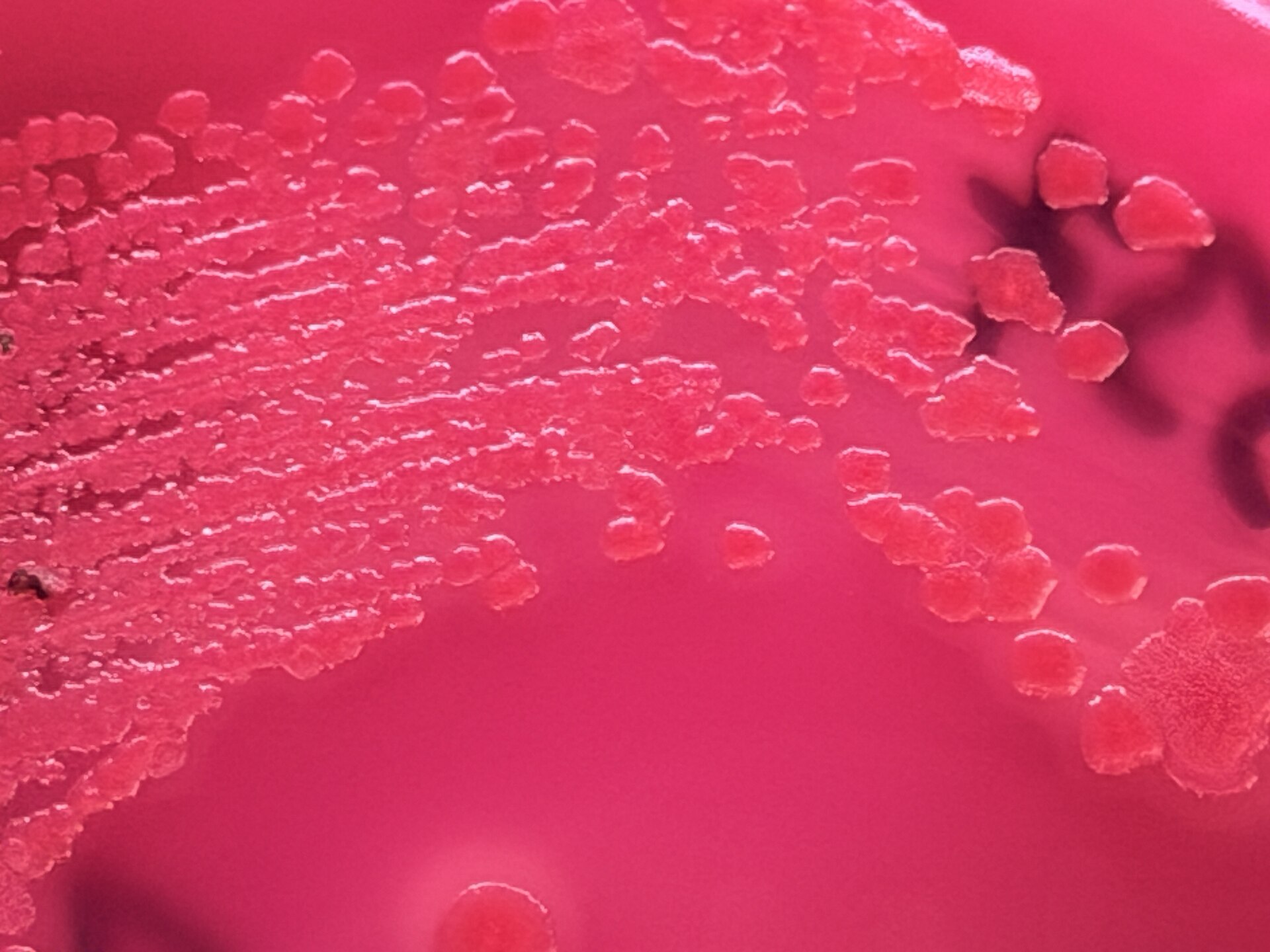
Bacteria that shrug off antibiotics are a growing problem, and some researchers are looking at antimicrobial peptides, small defence molecules made by insects and other organisms, for new leads. In one new lab study, a peptide mix from blowfly larvae stopped Escherichia coli from building up resistance to polymyxin B, an antibiotic often kept in reserve for hard-to-treat infections [1]. Other recent work adds fatty tails to a peptide, finds new peptide families in fruit flies, and designs peptides that flag bacteria for the immune system [2, 3, 4]. All of it is early lab work, and none of it tells us what would happen in people.
Key takeaways
- A proline-rich peptide mix from blowfly larvae did not kill E. coli on its own, but in lab passage experiments it stopped the bacteria from adapting to polymyxin B [1].
- Adding short fatty-acid tails to a peptide called P7 made it more active against Klebsiella pneumoniae in lab tests. It also narrowed the gap between doses that harm bacteria and doses that harm host cells [2].
- A comparison of five fruit fly species found previously unknown antimicrobial peptides. Lab-made copies were active against bacteria and fungi in a dish [3].
- Two of the four studies are preprints that have not yet been peer reviewed [3, 4]. All results come from cell culture or lab assays, not from animals given the peptides or from human trials [1, 2, 3, 4].
Blowfly larva peptides and polymyxin B resistance
The first study isolated a group of proline-rich peptides from the blood-like fluid (hemolymph) of blowfly larvae (Calliphora vicina) that had been infected [1]. The team purified the mix in several chromatography steps. Mass spectrometry then identified four peptides that resemble proline-rich peptides from other flies, especially domesticin from the housefly [1].
On its own, the peptide mix did not kill E. coli [1]. When combined with membrane-active peptide antibiotics, including polymyxin B, it made those drugs work better in the lab [1]. The authors then grew E. coli through repeated rounds of exposure to polymyxin B, a standard way to watch resistance develop. With the peptide mix present, the bacteria did not develop adaptive resistance to the antibiotic [1].
The authors suggest how this might work. They propose that the peptides interfere with the bacteria’s internal protein-making and protein-folding machinery. That could stop the bacteria from mounting the stress response they would need to lock in resistance [1]. This is the authors’ interpretation of their data. The abstract does not describe direct tests of the mechanism.
What kind of evidence: a cell-culture (in vitro) study in bacteria [1]. Limits: the abstract does not say how many bacterial strains or repeat experiments were used. There is no animal or human data, and adaptive resistance in a culture flask may not reflect how resistance arises during a real infection.
Adding lipid tails to the P7 peptide
The second study worked with P7, a short engineered peptide (sequence KIAKRIWKILRR) that forms a spiral-shaped helix [2]. Earlier work had found it active against drug-resistant Salmonella with little toxicity [2]. Here, the researchers tested P7 and three versions with fatty-acid tails of 8, 9 or 10 carbons attached to one end. They tested these against the ESKAPE group, six bacteria known for drug resistance in hospitals [2].
The tails made the peptides more active against bacteria, especially K. pneumoniae [2]. The tailed versions were better at punching holes in bacterial membranes and disrupting their electrical charge. Flow cytometry and electron microscopy pointed to membrane damage as the main way they kill bacteria [2]. The 8-carbon version (C8-P7) had the most favourable overall profile [2]. When C8-P7 was combined with the antibiotics gentamicin or ciprofloxacin, the effects added together but were not synergistic [2].
There were clear drawbacks. The tails did not make the peptides more resistant to being broken down by enzymes [2]. The tailed versions also had a limited therapeutic index: the gap between concentrations that harm bacteria and those that harm host cells was narrow. The authors say more structural work is needed to make them more selective [2].
What kind of evidence: a lab study using bacterial cultures and membrane-mimicking systems [2]. Limits: no animal infection model is described in the abstract, selectivity was limited, and stability against enzymes was not improved.
New peptide families in fruit flies
The third study, a preprint, asked a broader question: why do related fly species clear infections differently [3]? The researchers compared five species in the fruit fly family that diverged over about 60 million years, from Drosophila melanogaster to Scaptodrosophila lebanonensis [3]. Seven days after a Gram-negative bacterial infection, survival ranged from 19% to 99% across species. Survival tracked with how well each species cleared the bacteria, not with how well it tolerated them [3].
RNA sequencing showed that each species responded to the same pathogen in its own way. The data also revealed many genes found only in certain lineages, including predicted antimicrobial peptides [3]. The team made several candidate peptides synthetically and tested them in the lab. Peptides named Athelas, Mtkl and an Athelas-like peptide unique to S. lebanonensis were active against bacteria and fungi [3]. Daisho2, previously described as antifungal, also killed both Gram-positive and Gram-negative bacteria [3]. Machine-learning tools flagged more candidate peptides hidden in stretches of DNA that current gene annotations miss [3].
What kind of evidence: an animal study in flies combined with lab tests of synthetic peptides; a preprint not yet peer reviewed [3]. Limits: the peptide activity was shown in vitro only. The study is about how fly immunity evolves, not about drug development, and fly results do not apply to people.
Peptides that recruit antibodies
A fourth preprint takes a different route. Instead of killing bacteria directly, it tries to mark them so the immune system can find them [4]. The researchers fused a short antimicrobial peptide (K6) to a peptide that mimics part of the surface of Vibrio cholerae, the bacterium that causes cholera [4]. In lab tests, this fusion (FZ5) made E. coli more vulnerable to complement, a set of blood proteins that kill microbes. This happened when antibodies that recognise the cholera mimic were present, including antibodies in human serum from people given a live attenuated cholera vaccine [4].
A second approach used paired molecules of the antibiotic streptomycin as a ‘tag’ recognised by anti-streptomycin antibodies [4]. With human complement and these antibodies, the paired streptomycin molecules helped kill E. coli. They also boosted killing of a streptomycin-resistant Pseudomonas aeruginosa sample taken from a patient [4].
What kind of evidence: a lab study using bacteria, antibodies and serum; a preprint not yet peer reviewed [4]. Limits: results are from test-tube assays only, and the approach depends on the right antibodies being present.
Why biofilms matter
A separate review on Staphylococcus aureus shows why this field is hard [5]. The bacterium forms biofilms, slimy communities that shield it from the immune system and from antibiotics. These biofilms are linked to persistent infections on heart valves, bones, prosthetic joints and catheters [5]. The review lists antimicrobial peptides as one of several antibiofilm strategies under development, alongside enzymes, bacteriophages and CRISPR-based tools [5]. As a review, it summarises other research rather than reporting new experiments.
What we still don’t know
- Whether the blowfly peptide mix prevents resistance in other bacteria, other strains, or in a living infection model. The proposed mechanism also still needs direct testing [1].
- Whether lipidated P7 versions can be redesigned to harm bacteria while sparing host cells, and whether they would hold up against enzymes in the body [2].
- Whether the newly found fruit fly peptides work outside a dish, and whether they would be safe in any other animal [3].
- Whether peer review will confirm the findings of the two preprints [3, 4].
- Whether any of these approaches would be safe or effective in people. None has been tested in humans [1, 2, 3, 4].
References
- Proline-Rich Peptide Complex of Calliphora vicina Larvae and Its Role in Suppressing Adaptive Bacterial Resistance. Biochemistry (Moscow) (2026). doi:10.1134/S0006297926601346
- Lipid-tail modification of the antimicrobial peptide P7 enhances membrane disruption and antibacterial activity against Klebsiella pneumoniae. PeerJ (2026). doi:10.7717/peerj.21717
- Regulatory divergence and effector turnover shape species-specific bacterial clearance in Drosophilidae. bioRxiv : the preprint server for biology (2026). doi:10.64898/2026.08.31.748369
- Antibody-recruiting molecules based on mimotope fusion peptides and a dimeric antibiotic. bioRxiv : the preprint server for biology (2026). doi:10.64898/2026.09.29.755485
- Biofilm-associated genes in Staphylococcus aureus: role in chronic infections and therapeutic challenges. Frontiers in Microbiology (2026). doi:10.3389/fmicb.2026.1915213
Image credits
Free to use (CC0 / public domain); credited as a courtesy.
- Escherichia coli Colony Morphology on MacConkey Agar.jpg, by Ajay Kumar Chaurasiya (CC0, via wikimedia-commons): source
- A Pathway to Protocells on Titan – Animations (SVS20411 – 9-Cell-Membrane-Thumbnail).png, by NASA’s Scientific Visualization Studio – NASA Goddard (Public domain, via wikimedia-commons): source

