Ring-shaped peptides that survive the gut: the oral PCSK9 example
News
A review of oral enlicitide trial data and new lab and AI studies on cyclic peptide permeability show how far pill-form peptides have come, and what's unproven.
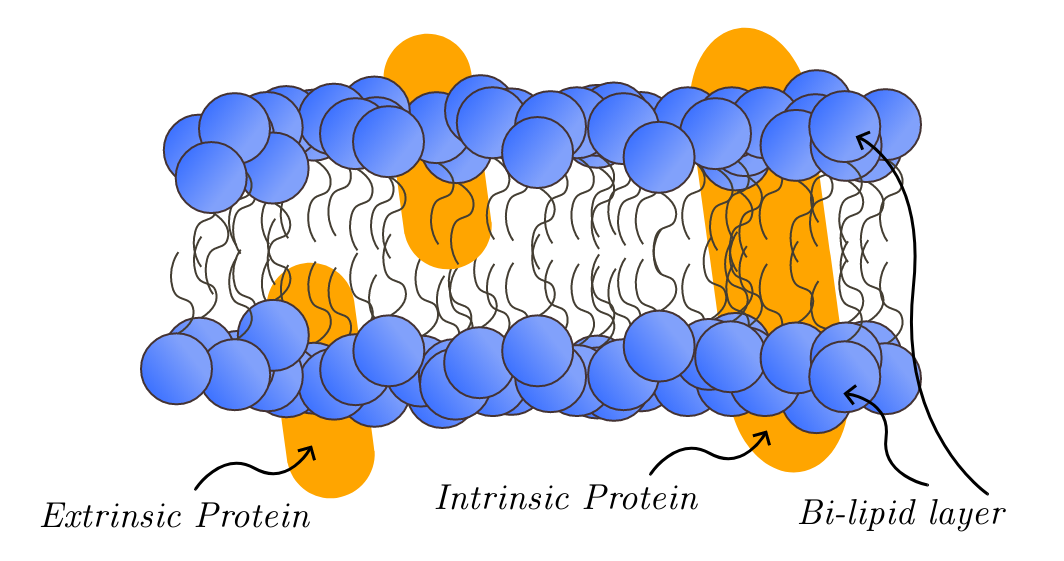
Peptide drugs are hard to give as pills: they are large, flexible molecules that tend to pass poorly through cell membranes, which limits how much reaches the bloodstream when swallowed [2, 3]. A new review describes enlicitide, a ring-shaped (macrocyclic) peptide that blocks PCSK9 and is taken by mouth; in phase 2 and 3 trials it lowered LDL cholesterol by about 57% to 65% at 24 weeks [1]. Alongside it, three new lab and computational studies look at how to measure and design permeability in cyclic peptides, and they show how much of that work is still early [2, 3, 4].
Key takeaways
- A literature review reports that enlicitide, an oral macrocyclic PCSK9 inhibitor, lowered LDL cholesterol by 57.1% to 64.6% at 24 weeks in phase 2 and 3 trials, similar to existing injected agents in the class [1].
- Cardiovascular outcome data for enlicitide (heart attacks, strokes, deaths) were not yet available when the review was written [1].
- A new automated lab assay measured “chameleonicity”, a peptide’s ability to change shape between water and fat-like environments, in hundreds of macrocyclic peptides [2].
- AI tools can help design cyclic peptides, but a benchmark found their confidence scores poorly predict how tightly a peptide actually binds its target [4].
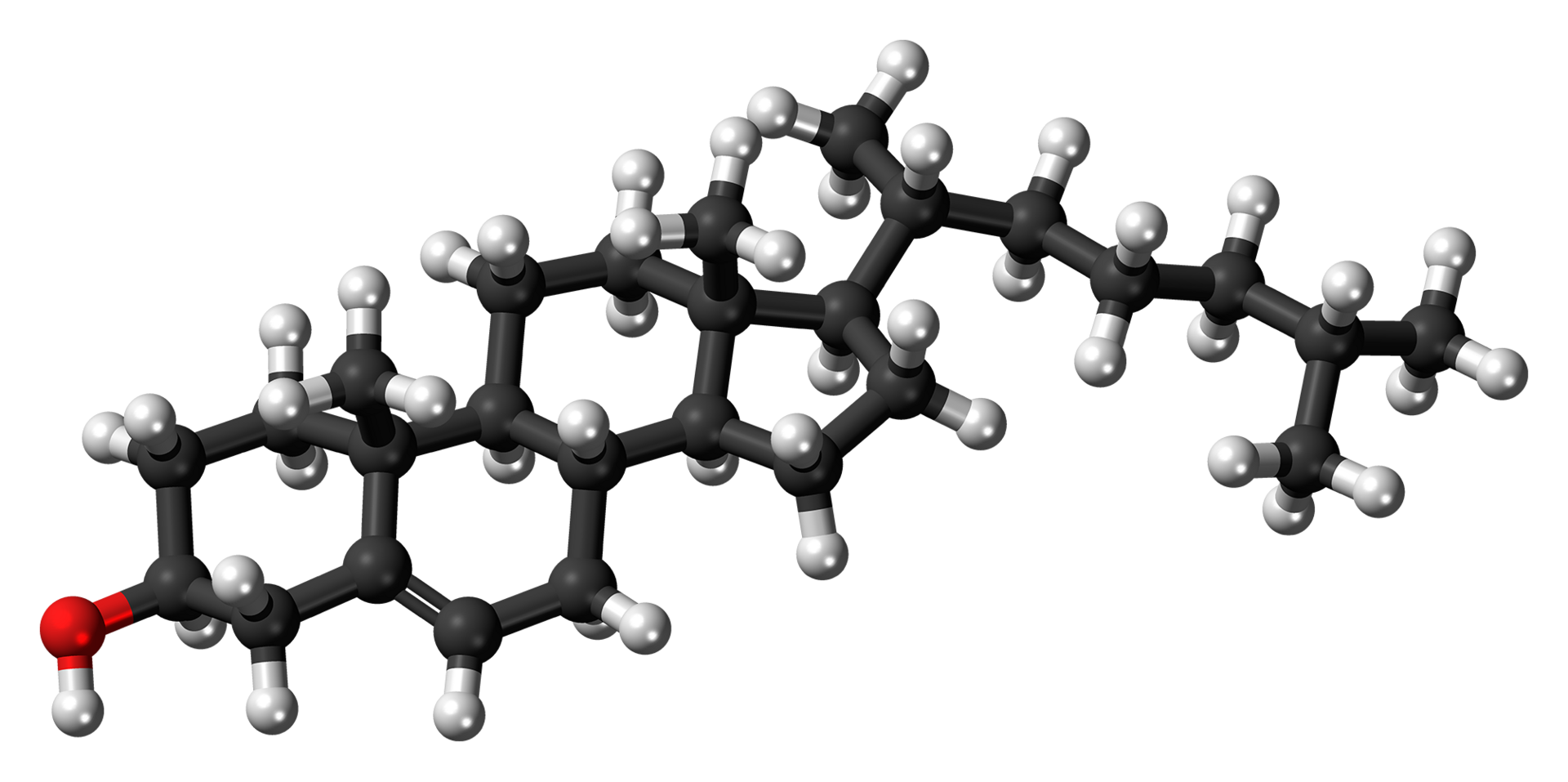
The oral PCSK9 example
The first paper is a review, not a new trial. The authors searched four literature databases through July 17, 2026, and summarized published English-language clinical trials of enlicitide [1]. The review reports that the drug received approval from the US Food and Drug Administration on July 16, 2026, and that it is the fifth approved agent aimed at PCSK9, a protein targeted by a class of LDL-lowering medicines [1].
According to the review, phase 2 and 3 trials in people with high cholesterol, including people with heterozygous familial hypercholesterolemia (an inherited form), showed LDL cholesterol reductions of 57.1% to 64.6% at 24 weeks [1]. Other cholesterol-carrying particles linked to artery disease also fell [1]. The authors describe the side-effect profile as favorable and say the LDL lowering is similar to existing PCSK9 inhibitors and greater than with the non-statin drugs bempedoic acid and ezetimibe [1].
What makes the drug relevant to peptide science is its design. The review describes a macrocyclic peptide formulated with permeation enhancers, ingredients meant to help the molecule cross the gut lining, which is what allows it to be taken by mouth [1].
Limits. The abstract does not give the number of trial participants or say how the trials compared with other drugs directly, so the size and design of the underlying studies cannot be judged from it [1]. The 24-week results measure cholesterol levels, a lab marker, not events such as heart attacks; the authors note that cardiovascular outcome data are still needed to confirm the drug’s role in reducing that risk [1]. A review also depends on the quality of the trials it summarizes.
Measuring how peptides change shape
One reason some cyclic peptides cross membranes better than expected is chameleonicity: the molecule can fold one way in water and another way in the fatty interior of a membrane, partly by forming hydrogen bonds within itself [2]. Until now there has been no fast way to measure this across many compounds [2].
The second study is a laboratory methods paper. The researchers built an automated assay, called DynlogP, based on liquid chromatography and mass spectrometry [2]. It measures how fat-loving (lipophilic) a molecule is under two conditions, one that favors hydrogen bonds with the solvent and one that favors hydrogen bonds inside the molecule; the gap between the two readings gives a number for chameleonicity [2]. The team checked these readings against NMR spectroscopy and computer simulations of molecular motion [2].
After profiling hundreds of molecules, they report that chameleonicity is a common feature of macrocyclic peptides [2]. They also trained machine learning models on the data that could predict chameleonicity for new compounds [2].
Limits. This is a chemistry measurement study; no cells, animals or people were involved [2]. The assay measures a physical property linked to permeability, not oral absorption itself. The authors frame it as a tool for choosing which compounds to study further and say it needs further refinement [2].
Designing for binding and permeability at once
The third study tackles a common problem in design: changes that help a cyclic peptide bind its target often make it worse at crossing membranes, and most AI design tools focus only on binding [3]. The researchers built HighPlay3, a computational platform that designs cyclic peptides from scratch while scoring both predicted structure and predicted membrane permeability [3].
They tested it on two protein targets, MDM2 and GABARAP, then made and tested selected designs in the lab [3]. In binding tests, 80% of the designs aimed at MDM2 and 60% of those aimed at GABARAP showed binding in the micromolar range [3]. The GABARAP binders were then tested in Caco-2 cells, a human gut-derived cell line used to model intestinal absorption [3]. One candidate, GAB-D4, had the highest permeability of those tested and showed no sign of being actively pumped back out of the cells [3].
Limits. This is a computational design study with test-tube binding assays and a single cell-culture permeability model [3]. Micromolar binding is modest compared with many drug candidates. The abstract does not give the total number of peptides designed or tested, and no animal or human data are reported, so these results do not show that any designed peptide would be absorbed or active in a living body [3]. The authors describe the platform as suited to early-stage design and screening [3].
How good are AI structure tools for ring peptides?
The fourth study is a benchmark: the researchers compared several AI structure prediction tools on cyclic peptides whose real structures are known from public databases [4]. They asked how well each tool predicted and ranked the peptides’ 3D shapes, both alone and bound to their target proteins [4].
Newer tools predicted structures better than older ones based on an earlier generation of protein structure prediction [4]. But accurate results were mostly limited to peptides bound to proteins; predicting the shape of a free peptide in solution was much harder [4]. Telling the model that the chain is a closed ring, through a specific positional encoding, was key to accuracy, and representing peptides as amino acid sequences worked better than a general chemical text format [4].
Two findings stand out for design. First, even when a structure was predicted accurately, the model’s confidence scores correlated poorly with measured binding strength [4]. Second, physics-based simulations remained the only approach that captured the natural flexibility of cyclic peptides, though AI tools were far cheaper for predicting bound structures [4].
Limits. The benchmark covers peptides with structures already in public repositories, which may not represent new designs [4]. It is a computational comparison and does not test any peptide in cells, animals or people.
What we still don’t know
- Cardiovascular outcomes. Whether enlicitide’s cholesterol lowering leads to fewer heart attacks, strokes or deaths has not been shown; the review says outcome data are still needed [1].
- Long-term safety and real-world use. The reported efficacy data cover 24 weeks [1]. Longer follow-up and use in broader patient groups will matter.
- How general the approach is. Enlicitide relies on a macrocyclic design plus permeation enhancers [1]. It is not clear from these papers how readily that combination works for other peptide targets.
- From lab measures to absorption. Chameleonicity scores and Caco-2 permeability are useful early signals, but neither has yet been shown to reliably predict oral absorption in people [2, 3].
- Whether AI predictions match reality. Model confidence does not track real binding strength, and AI tools struggle with free, flexible peptides [4]. Designs still need lab testing, and the designed peptides in the HighPlay3 study have not been tested beyond cells [3].
Taken together, these papers show an oral macrocyclic peptide reaching approval on the basis of cholesterol data, while the tools for designing the next ones are still being built and checked [1, 2, 3, 4].
References
- Enlicitide: The First Oral PCSK9i for Lowering Low-Density Lipoprotein Cholesterol. Annals of Pharmacotherapy (2026). doi:10.1177/10600280261494015
- Dynlog P A Novel High-Throughput LC−MS Assay Quantifying Dynamic Lipophilicity and Chameleonicity of bRo5 Macrocyclic Peptides. Molecular Pharmaceutics (2026). doi:10.1021/acs.molpharmaceut.6c00409
- HighPlay3: Structure-Integrated de novo cyclic peptide design balancing binding affinity and membrane permeability. European Journal of Medicinal Chemistry (2027). doi:10.1016/j.ejmech.2026.119443
- Benchmarking AI-driven protocols for cyclic peptide conformer prediction and ranking. RSC Medicinal Chemistry (2026). doi:10.1039/d6md00676k
Image credits
Free to use (CC0 / public domain); credited as a courtesy.

