Do GLP-1 drugs work the same for everyone? Pooled trial data weigh in
News · Liraglutide
A pooled analysis of 13,670 trial participants found little sign that baseline traits drive large differences in response to GLP-1 receptor agonists.
A new pooled analysis of three large placebo-controlled trials, covering 13,670 people with type 2 diabetes, asked whether GLP-1 receptor agonists such as liraglutide and semaglutide work very differently from one person to the next [1]. For differences that can be explained by measured baseline traits, the answer appears to be no: the variation was small, and the average treatment effect was a reasonable summary for most participants [1]. That finding sets limits on how far these trials can support personalized predictions. Smaller and weaker studies of special groups and adverse-event reports show where the open questions remain [2, 3, 4, 5].
Key takeaways
- An exploratory pooled analysis of three placebo-controlled trials (13,670 people with type 2 diabetes) found that baseline traits explained only a small share of the variation in response. Large differences driven by those traits were ruled out within these trials [1].
- Baseline HbA1c ranked as the most important candidate effect modifier. Kidney function came next in one of the models [1].
- In a large health-records study of women with PCOS, GLP-1-based drugs taken before conception were associated with fewer adverse pregnancy outcomes than metformin. This is an observational association, not proof of cause [2].
- A case series of eight people with a rare form of lipodystrophy, and an analysis of spontaneous adverse-event reports, give early signals only. Both are hypothesis-generating rather than conclusive [3, 4].
What the pooled trial analysis did
The researchers combined individual-level data from three randomized, placebo-controlled trials [1]:
- LEADER, which tested subcutaneous liraglutide (n=9,340)
- SUSTAIN 6, which tested subcutaneous semaglutide (n=3,297)
- PIONEER 6, which tested oral semaglutide (n=3,183)
After exclusions, 13,670 patients were included [1]. The outcomes were defined using HbA1c (a measure of average blood sugar), body mass index and blood pressure [1].
The main tool was the causal forest, a machine-learning method built to estimate how a treatment effect might differ across people with different characteristics [1]. The team used it for three jobs [1]:
- Running global tests for whether treatment effect heterogeneity exists at all.
- Ranking candidate effect modifiers by importance.
- Estimating how large the heterogeneity actually is.
The authors describe the work as exploratory [1].
What it found and what it does not show
Baseline HbA1c ranked highest among the candidate effect modifiers across methods [1]. Kidney function ranked next in the relative-risk causal forest [1]. In plain terms, these were the measured traits most linked to differences in how participants responded.
Ranking first is not the same as mattering a lot. The magnitude estimates showed that the variation these traits jointly explained was small [1]. The authors therefore conclude that large covariate-driven heterogeneity can be ruled out in these trials, and that the average effect is a reasonable summary for most patients [1].
The wording matters. The analysis rules out large differences explained by the baseline traits that were measured [1]. It does not rule out variation linked to factors the trials did not record, such as genetics. It also cannot speak to people unlike those enrolled. The pooled data mix two different drugs and two routes of delivery [1], so the analysis is not specific to liraglutide alone. The abstract does not report the size of the average effects themselves [1].
Special groups: lipodystrophy and PCOS
Two newer studies look at groups that large diabetes trials rarely cover. Both rest on much weaker designs.
Congenital generalized lipodystrophy (CGL). CGL is a rare condition in which the body has very little fat tissue, often with severe metabolic problems. The study was a case series with no control group [3]. Eight adults aged 24 to 45 received liraglutide for 12 weeks and were then followed for 12 weeks after stopping [3]. Three of the eight stopped early because of gastrointestinal adverse events during the dose-escalation phase [3].
Among the five who finished:
- Median HbA1c fell by 2.5 percentage points [3].
- Insulin requirements fell by a median of 20% [3].
- The drop in triglycerides was not statistically significant [3].
Twelve weeks after stopping, median HbA1c rose by 2.2 percentage points and body weight by 3.7% [3]. Insulin needs also rose: one participant resumed insulin, and the others needed a median of 22% more [3]. Triglycerides rose in 80% of participants, though that change was not statistically significant [3].
The authors call this an exploratory signal and name tolerability as a limitation [3]. With five completers, no control group and a short follow-up, the study cannot establish effects. The authors themselves call for larger, controlled and longer-term studies [3].
Polycystic ovary syndrome (PCOS). This study used a target trial emulation, an observational design that uses health records to mimic a trial [2]. The data came from a global federated health-records network. The study compared women aged 18 and over with PCOS who used a GLP-1 or dual GLP-1/GIP receptor agonist before conception with women using metformin [2]. The GLP-1-based drugs were liraglutide, semaglutide or tirzepatide [2].
After propensity score matching, which pairs people with similar recorded characteristics, each group had 48,126 patients [2]. Over two years, the GLP-1-based drugs were associated with:
- A lower risk of a composite of adverse pregnancy outcomes (hazard ratio 0.38; 95% CI 0.34 to 0.41) [2].
- Lower risks of major adverse cardiovascular events (HR 0.88) and of type 2 diabetes (HR 0.31) [2]. These were exploratory outcomes [2].
The associations varied across some sensitivity analyses [2]. Matching can only balance factors that appear in the records, so hidden differences between groups may remain. The study groups three drugs together, which limits what it says about liraglutide on its own. The authors state that the study cannot evaluate safety or efficacy during pregnancy, and that the findings do not support using these drugs during gestation [2].
Adverse-event reports: signals, not proof
A separate study analyzed reports from 2021 to 2025 in the US Food and Drug Administration Adverse Event Reporting System (FAERS) [4]. Of 8,213,105 reports, 33,259 met the inclusion criteria [4]. The researchers compared semaglutide and liraglutide reports by indication, either type 2 diabetes or obesity [4]. They used metformin and orlistat as comparators to help separate drug-related signals from disease-related ones [4].
What the analysis found:
- Both drugs showed gastrointestinal adverse events [4].
- For liraglutide, signals included abdominal distention in type 2 diabetes reports (reporting odds ratio 1.46) and pancreatitis in obesity reports (ROR 2.90) [4].
- Semaglutide showed signals for impaired gastric emptying and for ischemic optic neuropathy [4].
- The authors also reported a signal for suicidal ideation, with a wide confidence interval (1.24 to 24.19) [4].
This kind of disproportionality analysis has well-known limits. Spontaneous reports are voluntary and incomplete, and they do not show how many people took a drug without problems. A signal means an event was reported more often than expected; it does not show that the drug caused it. The authors say future studies are needed to evaluate causal relationships [4].
What we still don’t know
- Unmeasured drivers of response. The pooled analysis ruled out large differences tied to measured baseline traits in three trials [1]. Variation linked to unrecorded factors, or seen in other populations, remains untested.
- Effects in rare and special groups. Evidence in lipodystrophy comes from five people who completed treatment, with tolerability problems and no control group [3]. Controlled studies have not yet been reported.
- Cause versus association in PCOS. The pregnancy findings come from observational records and varied across sensitivity analyses [2]. Randomized evidence would be needed to test cause and effect, and in-pregnancy safety was outside the study’s scope [2].
- Whether reported safety signals reflect real risks. The FAERS signals, including pancreatitis, optic neuropathy and suicidal ideation, need studies designed to test causation [4].
- Prevention after gestational diabetes. A registry entry lists a completed study of liraglutide aimed at preventing type 2 diabetes after gestational diabetes [5]. That registry record does not include results [5], so what the study found is not yet known from this source.
References
- Exploring heterogeneous treatment effects for GLP-1 receptor agonists in patients with type 2 diabetes. American Journal of Epidemiology (2026). doi:10.1093/aje/kwag261
- Preconception incretin therapy reduces pregnancy and cardiometabolic outcomes in polycystic ovary syndrome. The Journal of Clinical Endocrinology & Metabolism (2026). doi:10.1210/clinem/dgag423
- Liraglutide use in congenital generalized lipodystrophy: glycemic and metabolic outcomes. Frontiers in Endocrinology (2026). doi:10.3389/fendo.2026.1912138
- Indication-specific adverse event profiles of semaglutide and liraglutide: a FAERS disproportionality analysis. Frontiers in Pharmacology (2026). doi:10.3389/fphar.2026.1936967
- Liraglutide in the Prevention of Type 2 Diabetes After Gestational Diabetes. ClinicalTrials.gov NCT04324229, status: completed.
Image credits
Free to use (CC0 / public domain); credited as a courtesy.
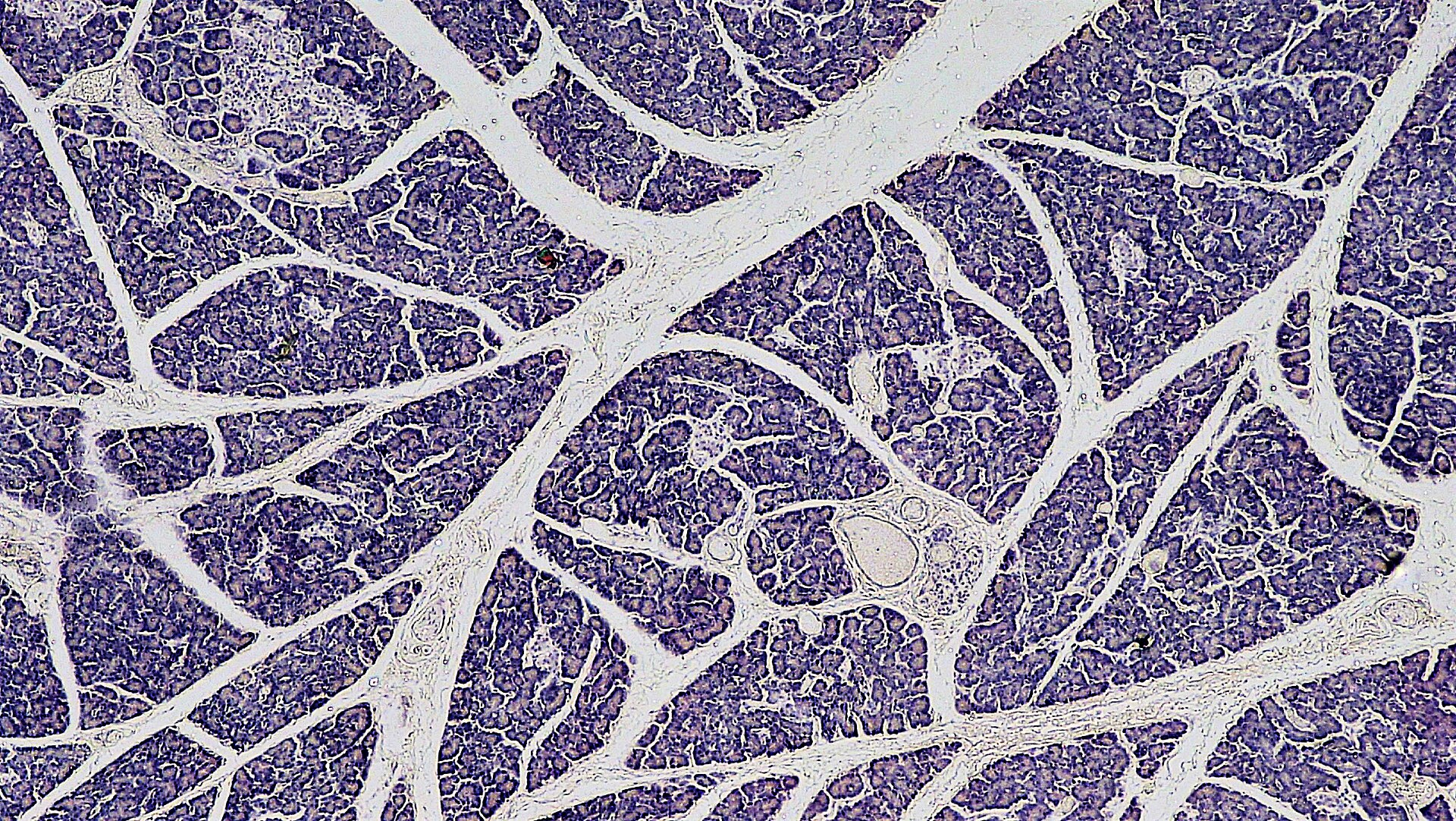
- Intercalated, Intralobular and Interlobular Ducts in the Human Pancreas (32757252397).jpg, by Berkshire Community College Bioscience Image Library (CC0, via wikimedia-commons):
Compounds
Topics
More on Liraglutide
Open the hub
.jpg” rel=”nofollow noopener”>source</a></li>
</ul>
</div>
</div>
<aside class=)
Liraglutide in the real world: new data on mood, thyroid and heart
Liraglutide · News