Inside the kidney: what a semaglutide biopsy trial did and didn’t find
News · Semaglutide
A 52-week trial with kidney MRI and biopsies found no change in its main MRI outcomes, but secondary signals pointed to blood vessels and fibrosis.
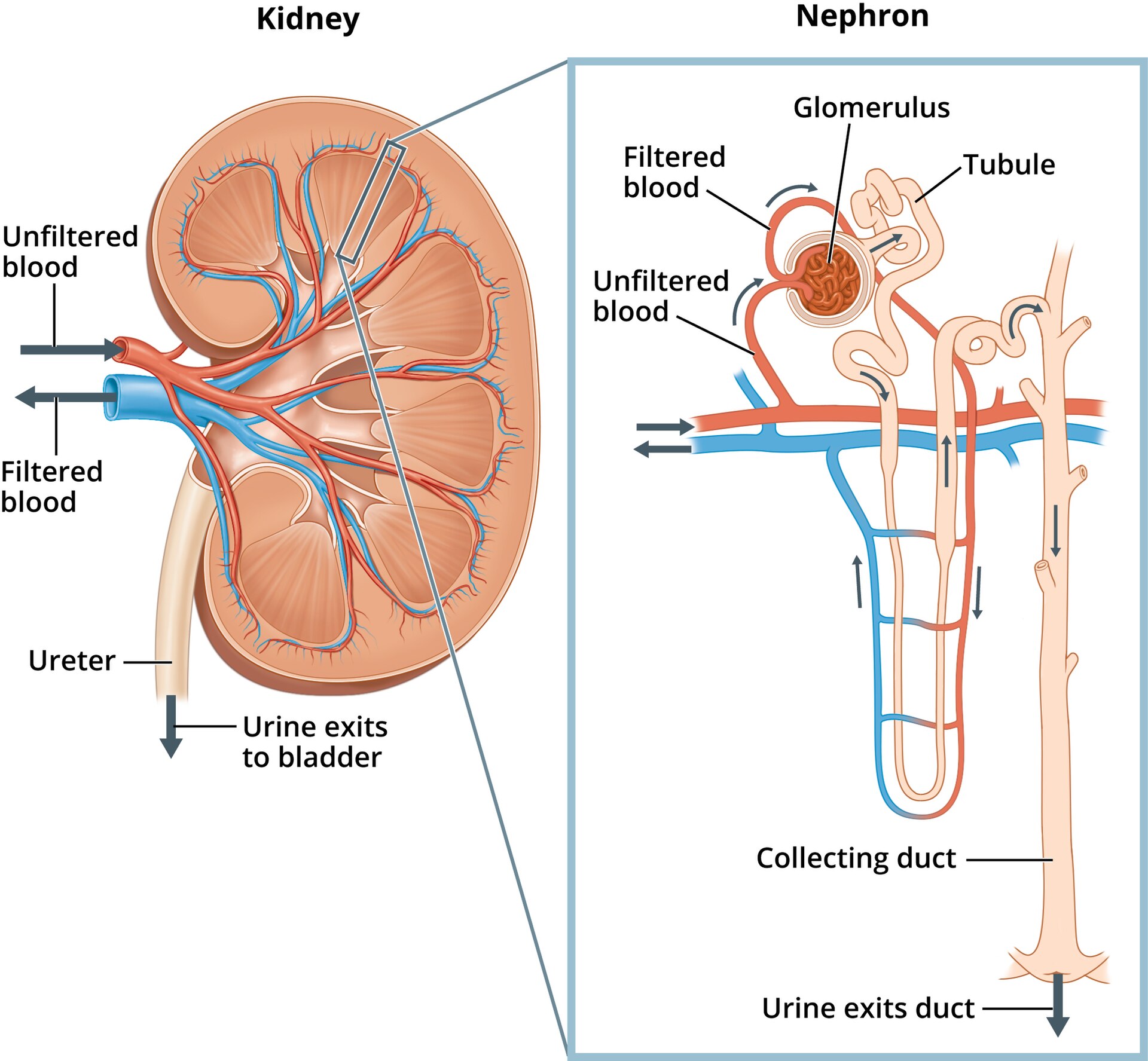
Semaglutide, a GLP-1 receptor agonist, has been linked to slower loss of kidney function in people with type 2 diabetes and chronic kidney disease, but how that might happen inside the kidney has been unclear [1]. A new 52-week randomized trial combined kidney MRI, biopsies and gene activity profiling of single cells to look for mechanisms [1]. Its main MRI outcomes were negative, while several secondary results pointed to blood vessels, scarring (fibrosis) and the cells that line the kidney’s filtering units [1].
Key takeaways
- In a placebo-controlled trial of 106 people with type 2 diabetes and chronic kidney disease, semaglutide did not significantly change the three coprimary MRI measures: kidney oxygenation, blood flow and tissue inflammation [1].
- Secondary outcomes suggested lower resistance in the kidney arteries, a pattern consistent with less fibrosis progression, and marked gene activity changes in glomerular endothelial cells [1].
- The tissue and gene analyses rested on small subgroups (33 biopsies, 22 single-nucleus samples, 13 spatial samples), so these signals are hypothesis-generating [1].
- Separate secondary analyses of other semaglutide trials looked at muscle and fat on MRI, frailty and differences in weight loss between people [2, 3, 4].
The kidney trial: design and main result
The trial randomized 106 adults with type 2 diabetes and chronic kidney disease (25 women, 81 men) to semaglutide or placebo for 52 weeks [1]. Researchers used multiparametric MRI of the kidney, which measures several tissue properties in one scan [1]. A subset also had kidney biopsies before and after treatment for microscopic examination (n = 33), single-nucleus RNA sequencing (n = 22) and spatial transcriptomics, which maps gene activity within tissue (n = 13) [1].
The trial set three coprimary outcomes, all from MRI: oxygenation measured by R2*, global kidney perfusion, and tissue inflammation measured by T1 mapping [1]. None of these was significantly altered by semaglutide compared with placebo [1]. That matters, because these were the questions the trial was primarily designed to answer.
A negative primary result does not prove there is no effect. It could mean the effect is absent, too small to detect in 106 people over a year, or not captured by these particular MRI measures. The abstract does not let us tell these apart [1].
The secondary signals: vessels, fibrosis and endothelial cells
Among secondary outcomes, semaglutide was associated with a significantly reduced renal artery resistive index compared with placebo, a measure related to resistance to blood flow in the kidney’s arteries [1]. The apparent diffusion coefficient, an MRI measure that tends to change as kidney tissue scars, stayed stable with semaglutide, which the authors interpret as prevention of fibrosis progression [1].
The gene activity data showed pronounced effects of semaglutide on glomerular endothelial cells, the cells lining the tiny blood vessels of the kidney’s filters [1]. Spatial analyses found fewer immune cells near these endothelial cells, which the authors describe as consistent with the gene activity results [1]. Based on these findings, the authors propose that kidney-related effects of semaglutide may involve reduced vascular resistance, less fibrosis and molecular programs that support endothelial cell health [1].
The limits are important. These were secondary outcomes, so they carry a higher risk of chance findings than the prespecified primary ones. The biopsy and transcriptomic groups were small, and men outnumbered women by more than three to one [1]. The trial measured imaging and tissue markers rather than hard clinical outcomes such as kidney failure, and “consistent with less fibrosis” is an interpretation of an imaging signal, not a direct count of scar tissue [1]. The trial is registered as NCT04865770 [1].
Muscle and fat on MRI: a small STEP UP sub-study
A prespecified secondary analysis of the phase 3b STEP UP trial used MRI to look at body composition in adults with obesity over 72 weeks [2]. Of 1,407 trial participants, only 55 with a valid baseline scan were included: 49 in a pooled semaglutide group and 6 on placebo [2].
Compared with placebo, the semaglutide group had a larger reduction in total adipose tissue (about 11 litres) and in visceral fat (about 1.5 litres), and a reduction in fat infiltration within thigh muscle [2]. Thigh muscle volume also fell, by an estimated 1.1 litres more than placebo, though this difference did not reach statistical significance, nor did the change in lean tissue [2]. Sit-to-stand performance, a simple test of leg function, was similar at the start and end of the study across both groups [2].
With only six people on placebo, the estimates are imprecise and the sub-study cannot settle whether muscle loss during weight loss affects function [2]. The authors themselves call for more research on this question [2].
Frailty and weight loss in the SELECT trial
SELECT was a large randomized trial of semaglutide versus placebo in adults with overweight or obesity and established cardiovascular disease but without diabetes [3]. A secondary analysis of 17,604 participants grouped people by a 31-item frailty index [3]. Major cardiovascular events were more common in frailer participants, and the benefit of semaglutide on these events appeared consistent across frailty groups, with no statistically significant interaction [3]. Within individual groups, though, the confidence intervals for the least and most frail groups included no effect [3].
Quality-of-life improvements appeared larger in frailer participants, and people on semaglutide were more likely to move to a less frail category by week 104 [3]. Subgroup analyses like this are useful for spotting large differences but are not designed to prove that an effect is the same in every group [3].
A second prespecified SELECT analysis looked at 7,594 participants who stayed on semaglutide for at least a year [4]. Median peak weight loss was 12.5%, reached after a median of 19 months, with wide variation between people [4]. Women had a higher median peak weight loss than men (16.6% versus 12.4%), and those who stayed at lower doses lost less [4]. Yet all the baseline characteristics together explained less than 10% of the variation in weight loss, leading the authors to conclude that individual response cannot be predicted from routine clinical information [4]. Because this analysis included only people who continued treatment, it may not reflect everyone who started [4].
What we still don’t know
- Whether the secondary kidney signals (artery resistance, diffusion stability, endothelial gene changes) will be confirmed in larger trials designed around them [1].
- Whether these imaging and tissue changes actually explain the kidney function findings reported in earlier work, or simply occur alongside them [1].
- How findings from a mostly male group of 106 apply to women and to other populations with kidney disease [1].
- Whether the muscle volume changes seen on MRI matter for strength and function over longer periods, given the very small placebo group [2].
- Which unmeasured biological, behavioral or genetic factors drive the large differences in weight loss between people [4].
- What an ongoing registered study will show about visceral fat and liver changes associated with semaglutide in chronic kidney disease; it is listed as recruiting, and no results are available yet [5].
References
- Effects of semaglutide on kidney disease in type 2 diabetes: a randomized placebo-controlled trial. Nature Medicine (2026). doi:10.1038/s41591-026-04674-2
- Effect of Semaglutide on Thigh Skeletal Muscle Volume, Fat Infiltration and Physical Function in People With Obesity: Secondary Analysis of STEP UP. Diabetes, Obesity and Metabolism (2026). doi:10.1111/dom.71323
- Efficacy and Safety of Semaglutide According to Frailty Status. JAMA Cardiology (2026). doi:10.1001/jamacardio.2026.3566
- Predictors of Peak Body Weight Loss With Semaglutide in the SELECT Trial. Diabetes Care (2026). doi:10.2337/dc26-0784
- Visceral Adipose Tissue and Liver Changes Associated With Semaglutide in CKD. ClinicalTrials.gov NCT07187830, status: recruiting.
Image credits
Free to use (CC0 / public domain); credited as a courtesy.
- Kidney and Nephron.jpg, by National Institute of Diabetes and Digestive and Kidney Diseases, National Institutes of Health. (CC0, via wikimedia-commons): source
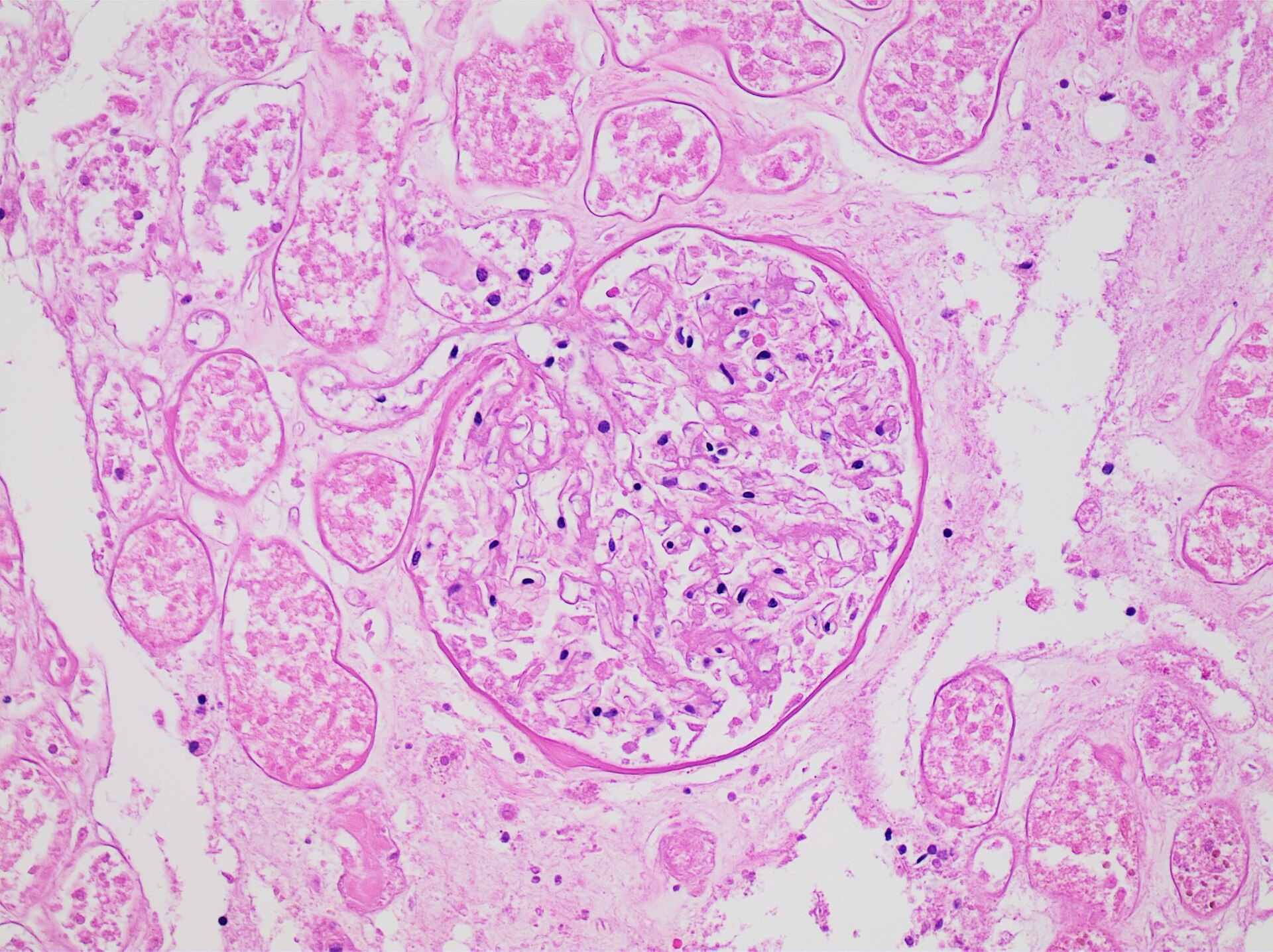
- Histopathology of renal autolysis.jpg, by Mikael Häggström, M.D. Author info – Reusing images- Conflicts of interest: None
Mikael Häggström, M.D.Consent note: Consent from the patient or patient’s relatives is regarded as redundant, because of absence of identifiable features (List of HIPAA identifiers) in the media and case information (See also HIPAA case reports guidance). (CC0, via wikimedia-commons): source
More on Semaglutide
Open the hub
Semaglutide safety by kidney function: trial data vs. drug reports
Semaglutide · News
Six months of keeping a research journal (demo)
Semaglutide · Member story


Semaglutide beyond weight: new evidence on liver, knees and safety
Semaglutide · News