Semaglutide safety by kidney function: trial data vs. drug reports
News · Semaglutide
A new FLOW trial analysis looks at semaglutide side effects across kidney function, set against FDA report data and real-world records.
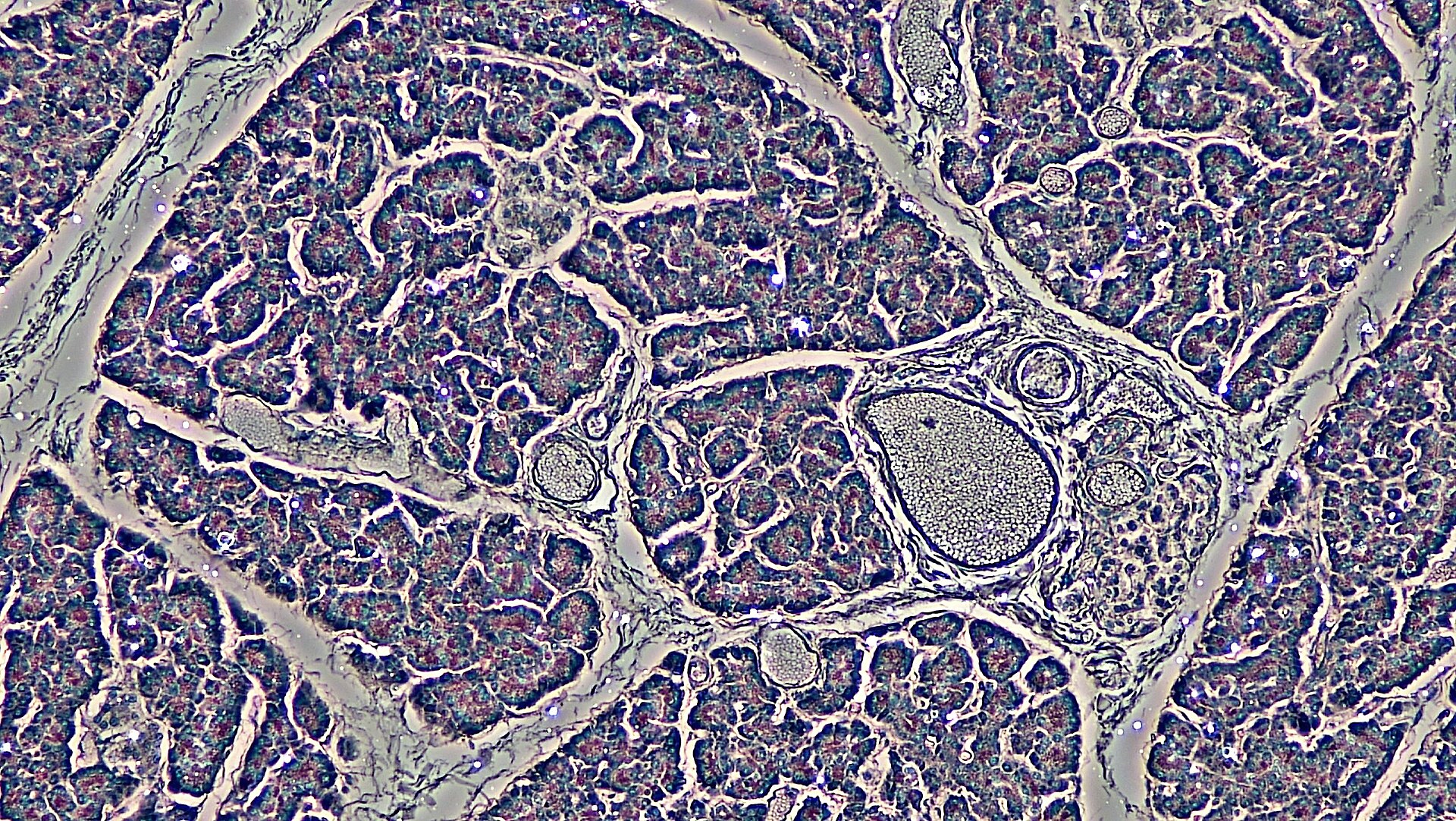
A new prespecified analysis of the randomized FLOW trial looks at how semaglutide’s side-effect profile held up across levels of kidney function in 3,533 people with type 2 diabetes and chronic kidney disease [1]. Two other new studies look at the same drug in different ways: one uses FDA adverse-event reports, the other uses electronic health records. On at least one event, acute kidney injury, they point in different directions [2, 3]. Reading them side by side shows what each kind of safety evidence can tell us and where it stops.
Key takeaways
- In the FLOW trial, serious adverse events were reported less often with semaglutide than with placebo in every baseline kidney-function subgroup, including people with the lowest kidney function [1].
- Stopping treatment because of gastrointestinal side effects was more common with semaglutide (4.5%) than placebo (1.1%), regardless of kidney function [1].
- An analysis of FDA adverse-event reports found semaglutide was reported more often than tirzepatide for several events, including acute kidney injury. The authors stress that these reports do not measure risk or show cause [2].
- A real-world records study found the opposite pattern for acute kidney injury in a small, specific group of patients. This is a reminder that different methods answer different questions [3].
The FLOW analysis: a randomized trial, looked at by kidney function
FLOW was a double-blind, randomized, placebo-controlled trial in adults with type 2 diabetes and chronic kidney disease [1]. Its main goal was to test semaglutide against a combined kidney outcome. That outcome counted a drop of 50% or more in estimated glomerular filtration rate (eGFR, a standard measure of kidney function), kidney failure, or death from kidney or cardiovascular causes [1]. Of the 3,533 participants, 1,767 received semaglutide and 1,766 received placebo [1].
The new paper is a prespecified secondary analysis. It splits the trial’s safety data by each participant’s eGFR at the start of the study [1]. The trial collected safety data selectively. It focused on serious adverse events, adverse events that led people to stop treatment, and a prespecified list of “adverse events of special interest” [1]. The authors describe the analysis as descriptive: they report numbers by subgroup rather than formal statistical comparisons [1].
The main findings:
- Serious adverse events. These were less frequent with semaglutide than placebo across eGFR subgroups. The figures were 45.1% vs. 50.4% in people with eGFR of 60 or more, and 56.4% vs. 60.4% in people with eGFR under 30 [1]. Serious events involving infections, the heart, the lungs and airways, and metabolism and nutrition were generally less frequent with semaglutide, whatever the starting kidney function [1].
- Stopping treatment. Discontinuation because of adverse events rose as kidney function fell, in both groups. It was about 11% in both arms at eGFR 60 or more, and about 19% in both arms at eGFR under 30 [1]. In other words, lower kidney function went with more stopping, but semaglutide and placebo were close at each level [1].
- Gut side effects. Stopping specifically because of gastrointestinal adverse events was more common with semaglutide (4.5%) than placebo (1.1%), regardless of eGFR [1].
- Events of special interest. Their frequency was similar between groups across eGFR subgroups [1].
The authors concluded that no unexpected safety concerns were identified across the range of kidney function represented in the trial [1].
Limits. Because the analysis is descriptive, the subgroup differences are not formally tested. Safety data were collected selectively, so milder side effects that were not serious and did not lead to stopping may be under-captured [1]. The results also apply only to the kinds of people enrolled in FLOW: adults with type 2 diabetes and chronic kidney disease [1].
FDA adverse-event reports: signals, not rates
The second study is a retrospective pharmacovigilance analysis of the FDA Adverse Event Reporting System (FAERS). It covers reports submitted from January 2022 through June 2026 [2]. After duplicates were removed, the authors identified 60,423 reports listing semaglutide only and 143,126 listing tirzepatide only [2]. They used a method called disproportionality analysis. It asks whether an event shows up more often in one drug’s reports than in another’s, and expresses the answer as a reporting odds ratio (ROR) [2].
Compared with tirzepatide, semaglutide reports more often mentioned several events [2]:
- impaired gastric emptying (ROR 6.39)
- intestinal obstruction or ileus (ROR 4.56)
- acute kidney injury (ROR 2.51)
- pancreatitis (ROR 2.18)
- vomiting (ROR 2.11)
- optic ischaemic neuropathy (ROR 15.77)
Alopecia (hair loss) was relatively more often reported with tirzepatide [2]. Semaglutide reports also had higher adjusted odds of listing hospitalization or death [2]. In an exploratory analysis of reports from men, erectile dysfunction appeared in 92 of 16,673 semaglutide reports and 46 of 27,321 tirzepatide reports. The authors label this finding hypothesis-generating [2].
Limits. The authors state plainly that all findings reflect spontaneous reporting, not comparative clinical risk or causality, and need confirmation in population-based studies [2]. A reporting odds ratio compares shares of reports. It does not measure how often an event happens in people taking a drug. Reporting can be shaped by media attention, how long a drug has been on the market, and who tends to send in reports. The database has no count of how many people took each drug without any problem.
Real-world records and a single case
The third study used de-identified electronic health records from a federated network covering about 29 million patients [3]. It focused on a narrow group: people with repeated prescriptions only at the lowest approved starting dose for at least six months. That meant 814 of 490,072 semaglutide-treated patients and 1,016 of 322,442 tirzepatide-treated patients [3]. In a matched comparison, the tirzepatide group had higher 24-month rates of several events, including acute kidney injury (2.7% vs. 0.4%) [3]. The semaglutide group had higher rates of a few others, such as ankle swelling (6.9% vs. 3.7%) [3]. Prescriptions for kidney-supportive and high-potassium therapies rose after low-dose tirzepatide but not after low-dose semaglutide [3].
Limits. This is an observational study. It shows associations, not cause [3]. The groups are small, unusual slices of all patients treated with these drugs, and the prescription pattern was used as a stand-in that the authors say does not establish why people stayed at that level [3]. The authors call for prospective studies to follow up [3].
A separate case report describes a 68-year-old woman with type 2 diabetes. She developed euglycemic diabetic ketoacidosis, a dangerous acid build-up that occurs with near-normal blood sugar [4]. It followed about three weeks of nausea, vomiting, diarrhoea and very little eating after she started semaglutide, even though she had reportedly stopped empagliflozin about two weeks earlier [4]. She improved with hospital care [4]. The authors suggest that gut intolerance and poor carbohydrate intake may have plausibly contributed [4]. A single case cannot establish cause or frequency. Its value is in flagging something clinicians should look for: normal blood sugar should not delay testing for ketones [4].
Why the evidence types disagree
The acute kidney injury findings show the problem clearly. FAERS reports mentioned it relatively more often with semaglutide [2]. The records study, in a small low-dose group, found it more often with tirzepatide [3]. In FLOW, adverse events of special interest occurred at similar rates with semaglutide and placebo across eGFR levels [1].
These results are not necessarily contradictory. They measure different things:
- A randomized trial compares a drug with placebo in similar groups, which supports cause-and-effect conclusions within that population [1].
- Spontaneous reports can flag possible signals across very large numbers of users, but cannot give rates or show cause [2].
- Health records reflect routine care, but carry the confounding and selection issues of any observational design [3].
- Case reports describe single events in detail and generate questions [4].
Of these, the trial gives the most direct answer for its own population on serious events and treatment stopping, and it found no unexpected safety concerns by kidney function [1].
What we still don’t know
- Whether the subgroup patterns in FLOW would hold up under formal statistical testing, and whether they apply beyond the population the trial enrolled [1].
- Whether the reporting signals from FAERS, including optic ischaemic neuropathy and erectile dysfunction, reflect real differences in risk. The authors say population-based studies are needed [2].
- How sustained low-level prescribing affects outcomes, which the records-study authors say needs prospective research [3].
- How semaglutide performs on kidney and heart outcomes in other populations. A phase 4 study of adults with type 2 diabetes and chronic kidney disease in China is registered and recruiting, with no results yet [5].
References
- Safety outcomes of semaglutide by chronic kidney disease severity in the FLOW trial. Kidney International (2026). doi:10.1016/j.kint.2026.09.026
- Comparative adverse-event reporting patterns of semaglutide and tirzepatide: a disproportionality analysis of FAERS. Endocrine (2026). doi:10.1007/s12020-026-04840-z
- Comparison of cardiometabolic benefits and tolerability in patients on sustained low doses of semaglutide or tirzepatide. Biology Methods and Protocols (2026). doi:10.1093/biomethods/bpag048
- Severe Euglycemic Diabetic Ketoacidosis After Semaglutide-Associated Poor Intake Despite Empagliflozin Discontinuation: A Case Report. International Medical Case Reports Journal (2026). doi:10.2147/IMCRJ.S650090
- A Research Study Looking at Kidney and Heart Health in Adults With Type 2 Diabetes and Chronic Kidney Disease Treated With Semaglutide in China. ClinicalTrials.gov NCT07900438, status: recruiting.
Image credits
Free to use (CC0 / public domain); credited as a courtesy.
More on Semaglutide
Open the hubSix months of keeping a research journal (demo)
Semaglutide · Member story
Semaglutide beyond weight: new evidence on liver, knees and safety
Semaglutide · News


Inside the kidney: what a semaglutide biopsy trial did and didn’t find
Semaglutide · News